


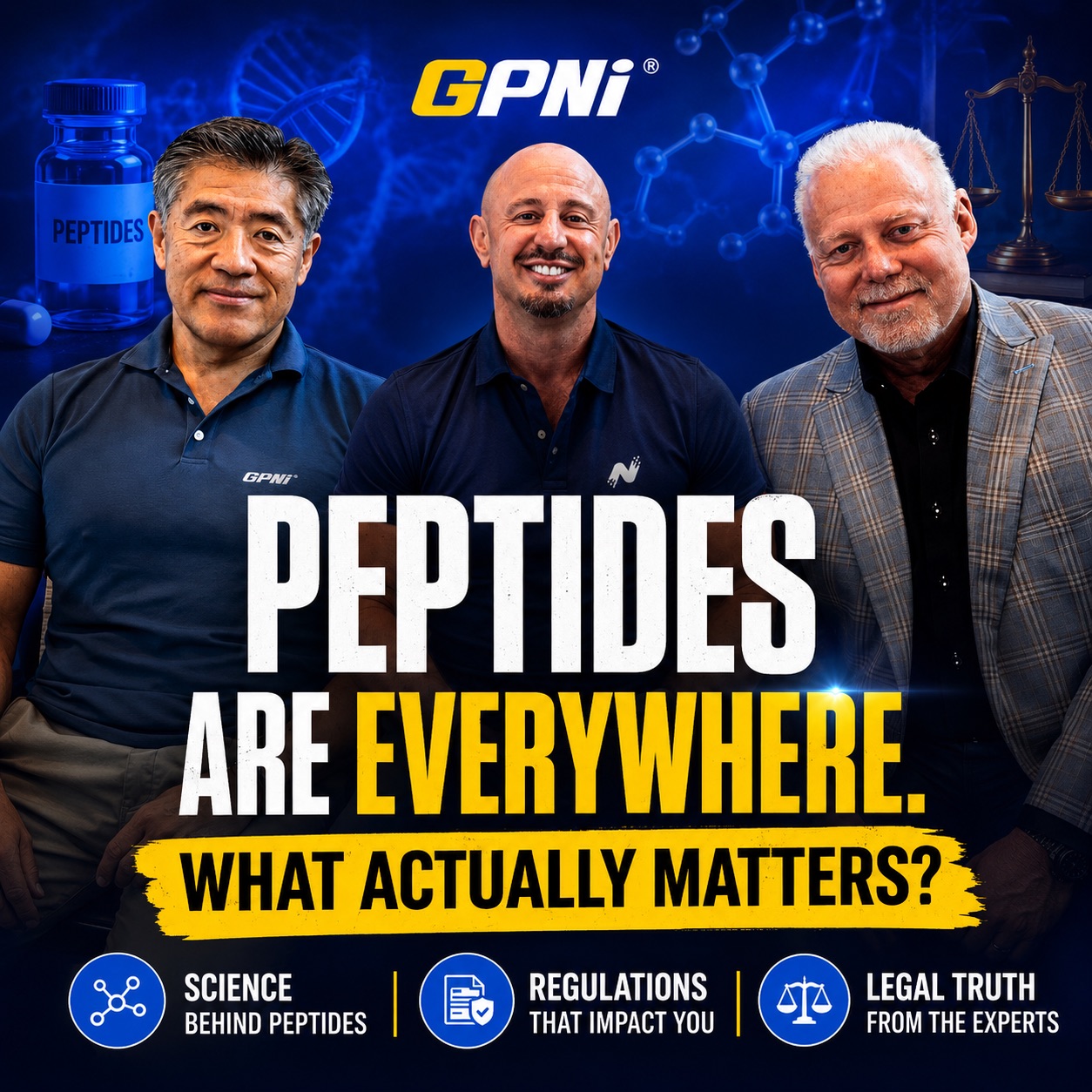
In this nearly 2-hour GPNi Peptide Podcast, filmed live at the ISSN 2026 Annual Conference, we take a science-based deep dive into peptides, GLP-1 therapy, regulation, nutrition support, and the practical questions now facing the sports nutrition industry.
The conversation also covers:
- The difference between weight loss and fat loss
- Why protein quality is not only about total grams
- DIAAS and digestible indispensable amino acids
- The role of protein during GLP-1 use
- Common creatine dosing considerations
- Sweeteners and practical nutrition questions • Why professionals need to separate online hype from evidence-based practice
This was not a peptide promotion session.
It was a professional, science-led discussion about where peptides fit, where the risks are, and why the sports nutrition industry needs a stronger framework for evaluating emerging topics in health, performance, and body composition.
Hosted by Drew Campbell, CISSN, Founder & CEO of GPNi, this discussion features two leading voices with very different but highly relevant expertise:
Rick Collins, widely known in the industry as the “Peptide Lawyer,” breaks down the legal and regulatory side of peptides in the United States. Rick explains why peptides cannot all be treated as one category. Some are approved prescription drugs, some are still moving through research and approval pathways, and others are being sold online as “Research Use Only” while still being discussed for human use. His message is clear: legality, evidence, medical supervision, and product quality all matter.
Dr. Seiji Aoyagi, GPNi Japan Director, brings the nutrition and performance perspective, especially around GLP-1 receptor agonists. These medications can reduce appetite, slow gastric emptying, and support weight management, but they do not replace proper nutrition planning, resistance training, or protein quality. Dr. Seiji explains why preserving lean mass, supporting adequate protein intake, and understanding digestibility are critical, especially when total food intake is reduced.


 Instagram
 Facebook
 YouTube
 Twitter
 Linkedin