Female training and nutrition should take female physiology and hormonal changes into account. But that does not mean every workout and meal plan needs to follow a fixed menstrual-cycle template.
Online advice about “cycle syncing” is everywhere. Women are often told that one phase is best for heavy lifting, another is better for fat loss, or that performance will inevitably decline at certain points in the cycle.
These ideas are easy to understand and easy to share. However, they are not always supported by current evidence.
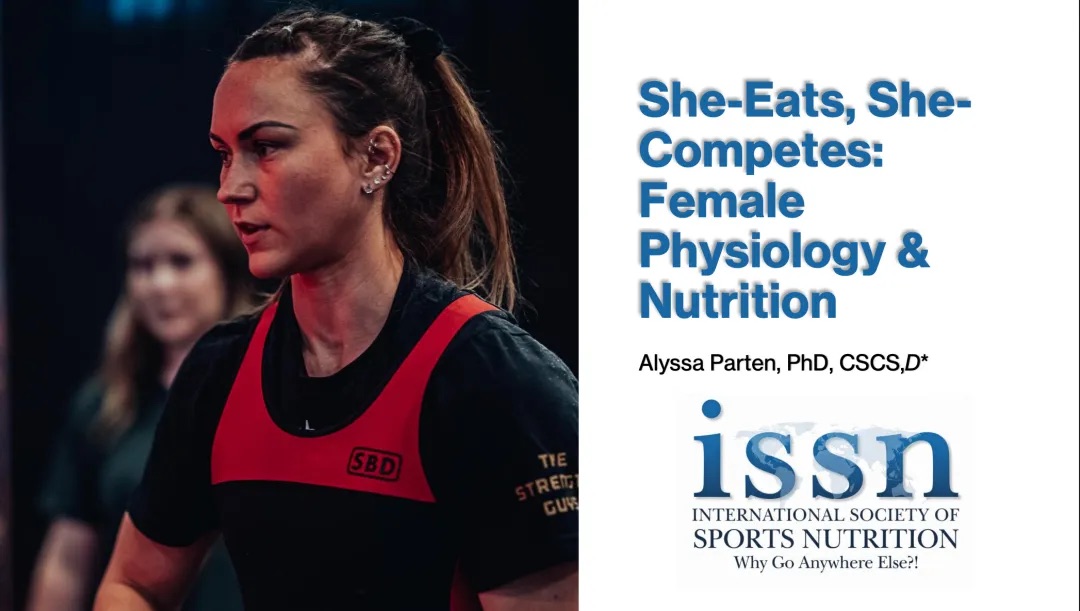
At the 2026 ISSN Nutrabolt Conference, exercise scientist Dr. Alyssa Parten discussed research on female resistance training, hormone metabolism and long-term performance. Her message was clear: female physiology should be understood, but it should not be turned into a rigid set of rules.
Physiology is not the same as prescription.
The menstrual cycle includes the follicular phase, ovulation and the luteal phase. Estradiol and progesterone levels change across these stages.
These changes are real. But moving directly from hormonal changes to the conclusion that every woman should follow the same cycle-based training plan requires much stronger evidence.
We need more research involving women, and female physiology deserves more attention. But greater attention should not lead to one-size-fits-all recommendations.
The Menstrual Cycle and Training
1. Cycle Phase Does Not Consistently Determine Strength or Muscle Growth
A systematic review and meta-analysis by McNulty and colleagues found that menstrual-cycle phase may have a small effect on exercise performance. However, the average effect was minor, the results varied considerably between studies, and the overall quality of evidence was limited.
A later review by Colenso-Semple and colleagues also concluded that there is not enough evidence to show that menstrual-cycle phase meaningfully affects acute strength performance or long-term resistance-training adaptations.
Overall, current research does not show a consistent or predictable effect of cycle phase on:
- Maximal strength
- Power
- Muscle growth
Differences between individuals are often much greater than the average differences between cycle phases.
This does not mean the menstrual cycle should be ignored. If an athlete experiences cramps, fatigue, poor sleep or other symptoms, reducing training volume or intensity may be appropriate.
But this should be based on the individual’s actual condition, not on the assumption that every woman will perform poorly during the same phase.
Some women may feel worse during menstruation. Others may feel completely normal or even perform well. A particular phase does not automatically prevent good training or competition results.
2. Training Intensity Usually Matters More Than Cycle Phase
Some studies suggest that higher estradiol levels may slightly increase fat oxidation during moderate-intensity endurance exercise. Changes in the ratio of estradiol to progesterone have also been linked to differences in fuel use.
However, these findings have not been consistent.
Other studies have found little difference in glucose use or fat oxidation between cycle phases, particularly when exercise intensity is high. In resistance training, differences between phases also tend to disappear when training volume and workload are matched.
This suggests that the menstrual cycle may cause subtle changes in metabolism, but these changes are usually not the main factor determining performance or nutrition needs.
Training intensity, training volume and the purpose of the session generally have a much greater effect.
The cycle can provide useful context, but it should not replace the training programme itself.
The Menstrual Cycle and Nutrition
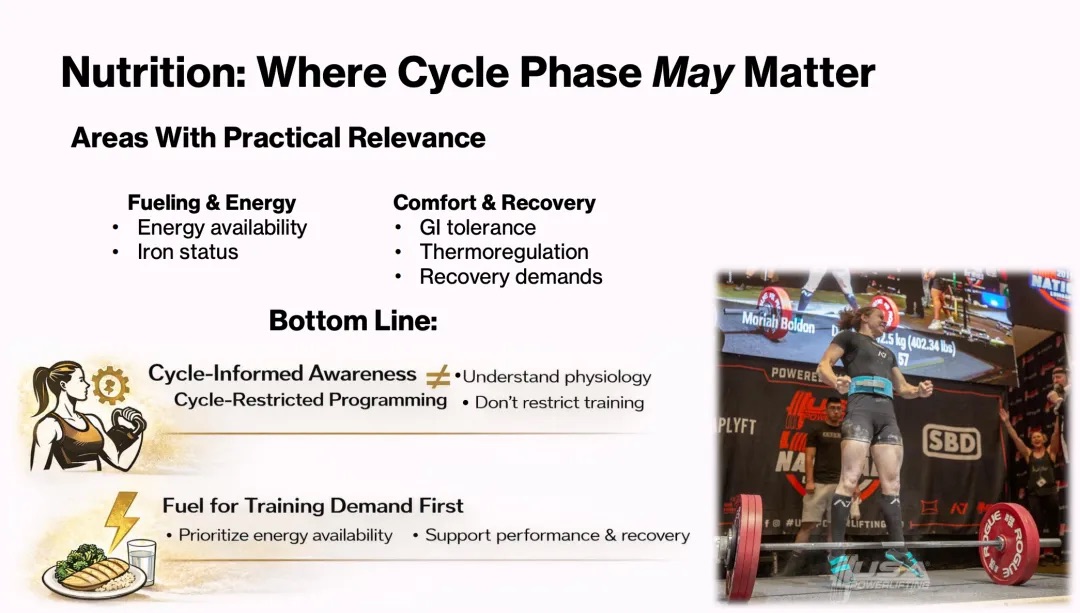
In nutrition, the menstrual cycle may be relevant to energy availability, iron status, gastrointestinal comfort, temperature regulation and recovery.
However, the first priority for female athletes remains the same throughout the year: eating enough to support training and normal physiological function.
Long-term low energy intake may affect:
- Training adaptation
- Recovery
- Menstrual function
- Bone health
- Immune health
- Overall performance
The ISSN position stand on the nutritional concerns of female athletes states that adequate energy intake and appropriate energy availability should be the primary nutritional consideration.
For many female athletes, the biggest performance limitation may not be the menstrual cycle. It may simply be that they are not eating enough.
Iron Status
Iron deficiency deserves particular attention in women with heavy menstrual bleeding, endurance athletes, vegetarians and vegans, and athletes who are restricting energy intake.
Persistent fatigue, poor recovery or declining performance should not automatically be blamed on hormones. Iron status and overall nutrition may need to be assessed.
Digestive Symptoms and Appetite
Some women experience bloating, nausea, appetite changes, constipation or diarrhoea during certain phases of the cycle.
In these cases, meal size, fibre intake, food timing and pre-training meals can be adjusted. These changes should be based on symptoms and personal tolerance rather than a universal menstrual diet.
Understanding your cycle does not mean you must follow strict eating rules for every phase.
Training and nutrition should still be guided mainly by the demands of the programme, with energy availability as the foundation.
Sometimes the Real Problem Is Under-Fuelling
During her presentation, Dr. Parten shared the case of a professional female powerlifter who completed a six-month mass-gain phase under the guidance of an experienced coach and registered dietitian.
During a 10-week energy-surplus period, the athlete:
- Increased body weight by 2.4%
- Added approximately 350 calories per day
- Increased carbohydrate intake by around 50 grams per day
- Improved her powerlifting total from 502.5 kg to 540 kg
- Added 10 kg to her bench press
This was an individual case, so it cannot prove that the increase in food intake alone caused the performance improvements.
However, it shows how a planned period of higher energy intake may support training quality, recovery and strength development.
It may also make weight-class management easier by reducing the need for extreme dieting immediately before competition.
For many female athletes, eating enough may be more important than trying to perfectly adjust every meal to the menstrual cycle.
Practical Advice for Coaches and Athletes
Prioritise Energy Availability Throughout the Year
Adequate energy intake is especially important during high-volume training, competition preparation, fat-loss phases and weight-class management.
Long-term under-fuelling should not become a normal part of training.
Match Carbohydrate Intake to the Training Load
Carbohydrate intake should reflect the work being performed that day.
Hard sessions and high-volume training generally require more carbohydrate. Rest days and lighter sessions may require less.
Carbohydrate intake should not be reduced simply because a cycle-based chart suggests that one phase is better for fat burning.
Use Cycle Tracking as a Tool, Not a Rule
Tracking the menstrual cycle may help athletes:
- Identify recurring symptoms
- Notice changes in recovery
- Monitor menstrual health
- Adjust training when symptoms are significant
It should not automatically determine training intensity or food intake.
Respond to the Athlete, Not the Calendar
If an athlete feels unwell, training can be modified.
If she feels strong and ready, there is no reason to reduce the session simply because an app says she is in a particular phase.
The Key Points
Current evidence suggests that:
- Menstrual-cycle phase has a small and inconsistent effect on strength, power and muscle growth.
- Training intensity, workload and energy availability are usually more important.
- Carbohydrate intake should be matched to training demands rather than decided in advance by cycle phase.
- Cycle tracking is useful for identifying individual patterns, but it should not become a rigid training system.
- Planned periods of higher energy intake may support long-term progress, especially in strength and weight-class sports.
Female physiology is not fragile. It is responsive, adaptable and resilient.
We need more high-quality research on female athletes. But women’s training should not be treated as completely different from basic training science, and the menstrual cycle should not be used to explain everything.
Respect female physiology, but continue to follow the foundations of good performance:
Train appropriately. Eat enough. Fuel the work. Recover well. Adjust to the individual.
Evidence, rather than stereotypes, should guide how we support women in training and competition.
GPNi members can access the full presentation on women’s training and nutrition, along with selected ISSN conference materials and professional sports nutrition resources, through the GPNi Member Library.











 Instagram
 Facebook
 YouTube
 Twitter
 Linkedin