As an ISSN partner, GPNi® regularly shares evidence-based takeaways from ISSN Conferences for coaches, athletes, and practitioners. This article is based on an ISSN 2025 conference presentation by Dr. Grant Tinsley (PhD, CISSN) on the accuracy of common body composition tools in lean, muscular, resistance-trained adults.
Key Takeaways
- Many body composition methods were developed in general populations, and accuracy can drift in lean, muscular athletes.
- “Two-compartment” (2C) models can amplify error when fat-free mass assumptions don’t match athletic physiology.
- Multi-method “criterion” approaches (often called 4-compartment / 4C models) reduce assumptions and are widely treated as reference standards.
- In Dr. Tinsley’s ATLAS dataset, lab-grade tools (e.g., DXA, air displacement plethysmography) generally performed better than phone-based 3D scans and some consumer BIA devices (individual error still matters).
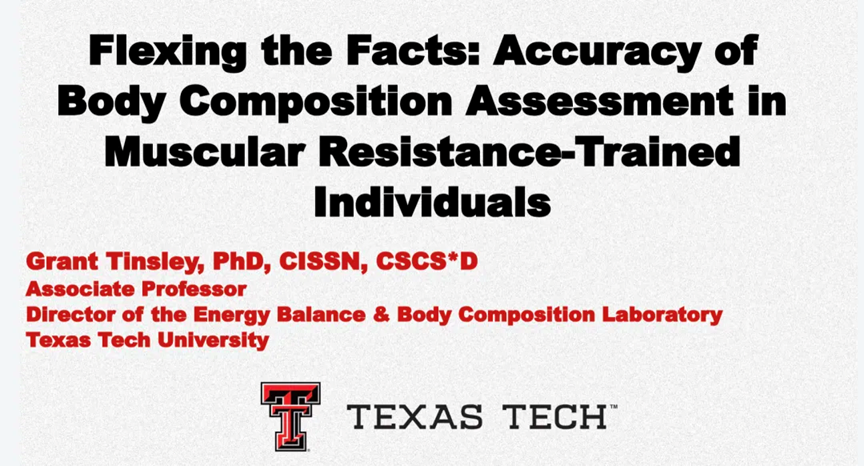
About the Speaker (ISSN)

Grant Tinsley, PhD, CISSN
- Tenured Associate Professor of Exercise Physiology, Texas Tech University
- Director, Energy Balance & Body Composition Laboratory
- Research focus: body composition assessment, energy balance manipulations, sports nutrition strategies
- Disclosures: The ATLAS study received support from an unrestricted donation (Renaissance Periodization) and Texas Tech University Graduate School.
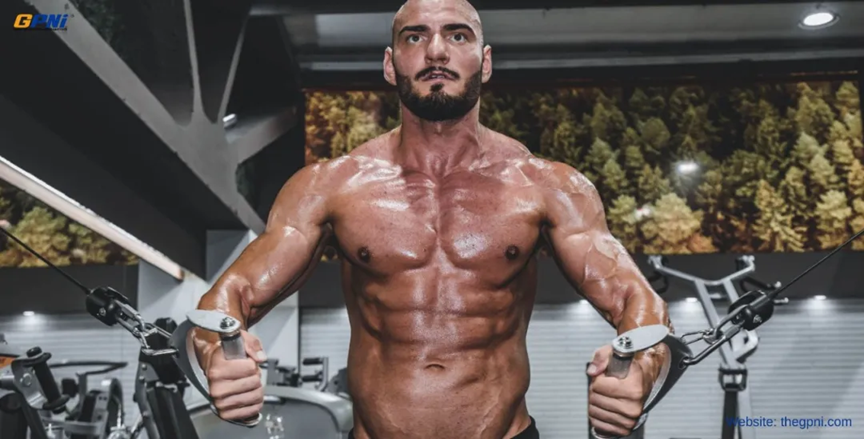
Why Muscular Athletes Get “Conflicting” Body Fat Numbers
If you’re lean and heavily resistance-trained, you’ve probably seen this:
- One device says 10% body fat, another says 15%
- Your scale jumps 2-4% overnight
That’s not automatically “you fluctuated.” It’s often the model and assumptions behind the tool.
The Model Behind Most Devices: 2C vs 4C
Most consumer tools (and many lab tools) rely on a two-compartment (2C) framework:
- Fat Mass (FM)
- Fat-Free Mass (FFM)
A key limitation is that 2C methods assume properties of FFM (like hydration and density) are “stable.” In real life, those assumptions can be violated especially across different populations and states (dieting, glycogen shifts, hydration changes).
A 4-compartment (4C) approach combines multiple measures (e.g., body volume, total body water, bone mineral) to reduce assumptions and is widely described as a criterion/gold-standard model in body composition analysis.
What Dr. Tinsley Presented at ISSN 2025: The ATLAS Study (What It’s Designed to Answer)
He highlights data from the ATLAS study (“Evaluation of Accessible Technologies and Laboratory Assessments in Muscular Resistance-trained Subjects”). Participants were adult males and females with sustained resistance training history and objective criteria for body fat % and fat-free mass index. They completed a broad suite of lab methods (e.g., DXA, air displacement plethysmography, professional bioimpedance, deuterium dilution) alongside accessible tools like consumer BIA and phone-based 3D scanning.
How to Interpret This (Important):
Even “good” methods have individual-level error. Your best use-case is often trend tracking under standardized conditions, not chasing a single number.
Practical Ranking for Decision-Making (The “What Should I Do?” Section)
Because tool performance depends on context and standardization, think in tiers:
Tier 1: When Accuracy Really Matters (Research, Contest Prep, Medical Nutrition)
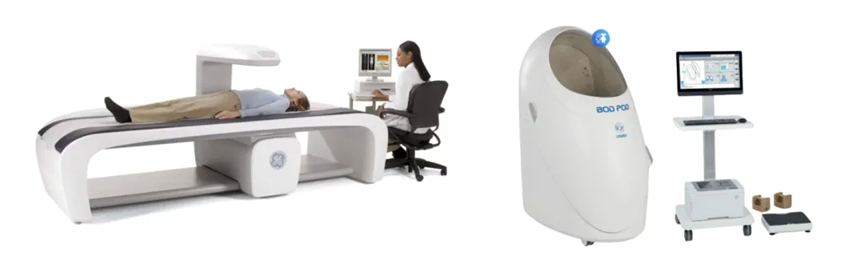
- DXA (strong overall reliability; still not perfect)
- Air displacement plethysmography (Bod Pod)
Best practice: Keep the same device + similar pre-test routine.
Tier 2: When You Need Scalable Assessments (Teams, Gyms, Repeated Testing)
- Professional multi-frequency BIA can be useful, but error can vary by device and protocol.
The protocol matters as much as the hardware.
Tier 3: Convenience Tools (Okay for Rough Trends, Not Absolute Truth)
- Consumer BIA scales
- Phone-based 3D scan apps
Use these for “directional signals,” not definitive body fat %.
Standardization Checklist (Use This to Reduce Noise)
Before testing, aim to keep these consistent:
- Same time of day
- Same hydration window
- Similar last training bout timing
- Similar carbohydrate/sodium intake
- Similar clothing, restroom timing
This matches the broader principle that body composition methods are sensitive to assumptions and physiological state reducing variability improves usefulness.
FAQ
Do I need a “perfect” body fat number?
Usually no. For most athletes, a combined dashboard works better: photos, circumferences, performance, recovery, and a consistent measurement tool.
Why does my BIA jump after training or travel?
Because BIA estimates are strongly affected by body water distribution. If you want to view the complete presentation document, please join the GPNi® membership.
The GPNi® website regularly updates the presentation documents of the ISSN Conferences. Becoming a GPNi® member will allow you to access more professional sports nutrition literature.
References
- Müller MJ, et al. Body composition analysis: Foundations, assumptions, limitations and recommendations. Proc Nutr Soc. 2016;75(2):181-193. doi:10.1017/S0029665116000141
- International Society of Sports Nutrition (ISSN). ISSN Conference Program 2025: “Flexing the Facts: Body Composition Measurement & Its Implications…”. 2025.
Disclosure: Educational summary from an ISSN conference session shared via GPNi® as an ISSN partner; not medical advice.












 Instagram
 Facebook
 YouTube
 Twitter
 Linkedin