When people hear the word “peptides,” many immediately think of names like BPC-157, TB-500, or GHK-Cu. But in reality, the peptide topic getting the most public attention today may be GLP-1.
GLP-1 stands for glucagon-like peptide-1. It is a peptide hormone naturally released by the body after eating. Medications such as semaglutide, and incretin-based drugs like tirzepatide, known by the brand name Mounjaro, are all closely connected to this GLP-1 signaling system.
Today, more and more people are paying attention to GLP-1. Coaches, nutritionists, and health professionals are also more likely to work with clients who are using, or considering using, GLP-1 medications. But the benefits of GLP-1 therapy are closely tied to proper nutrition management.
That is exactly what Dr. Seiji Aoyagi will focus on in the upcoming GPNi June Webinar.
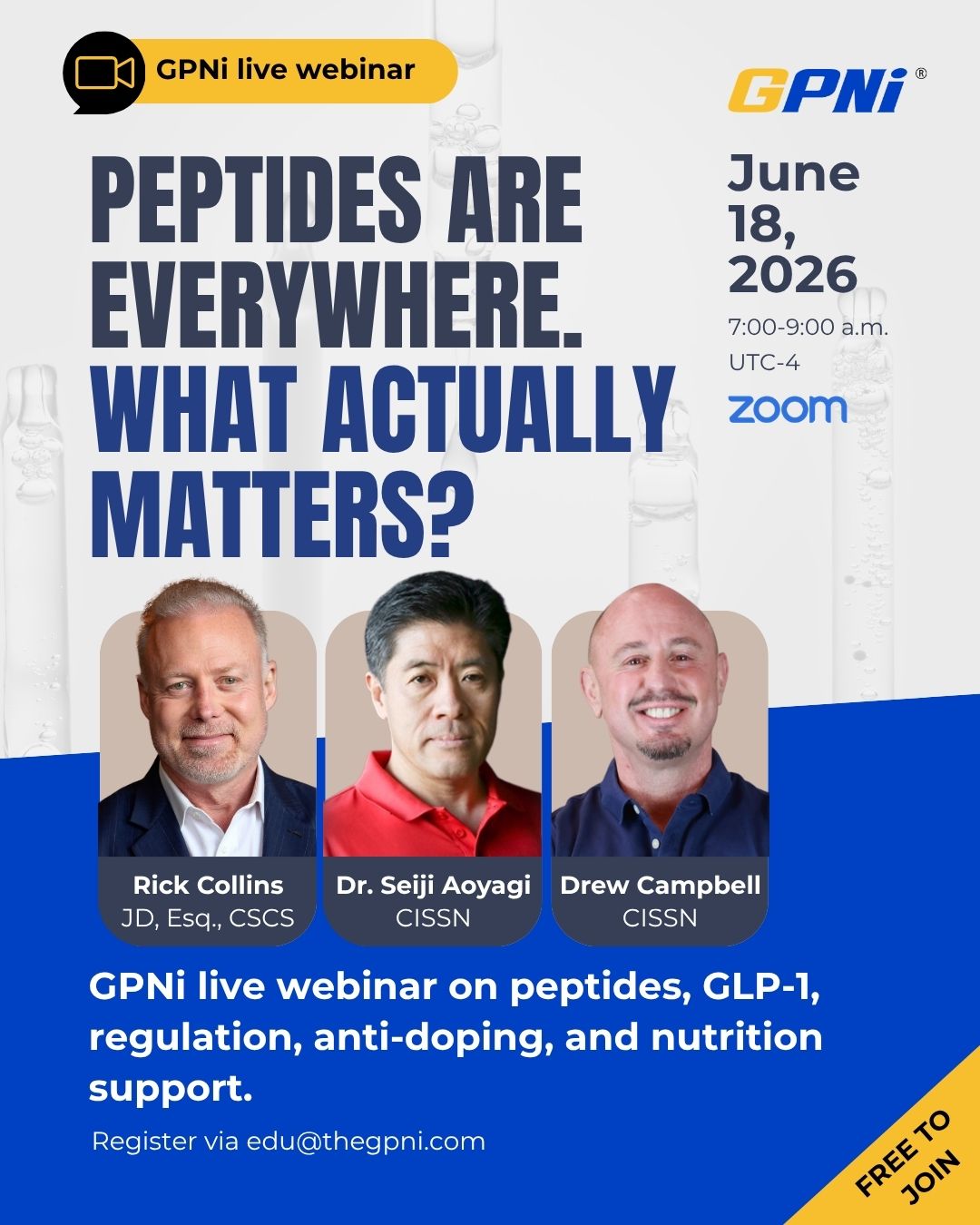
GPNi June Live Webinar: Peptides
Date: June 18, 2026
Time: 7:00 am – 9:00 am, Florida time (UTC-4)
Platform: Live worldwide on Zoom
Cost: Free to attend
CEC: 5
👉 Register here. For any inquiries, please contact edu@thegpni.com.
Drew Campbell, Founder and CEO of GPNi, and will include expert presentations followed by a roundtable discussion and live audience Q&A. This will be more than a traditional webinar. It will be an interactive and in-depth online conversation, designed to encourage open discussion and practical insights. Together, we will explore peptide nutrition, GLP-1-related topics, and nutrition strategies for weight management and overall health support.
In our previous article, we looked at Rick Collins’ presentation on the science, regulation, and risk boundaries of peptides. Today, we turn to Dr. Seiji Aoyagi’s session on how nutrition can help optimize GLP-1 therapy.
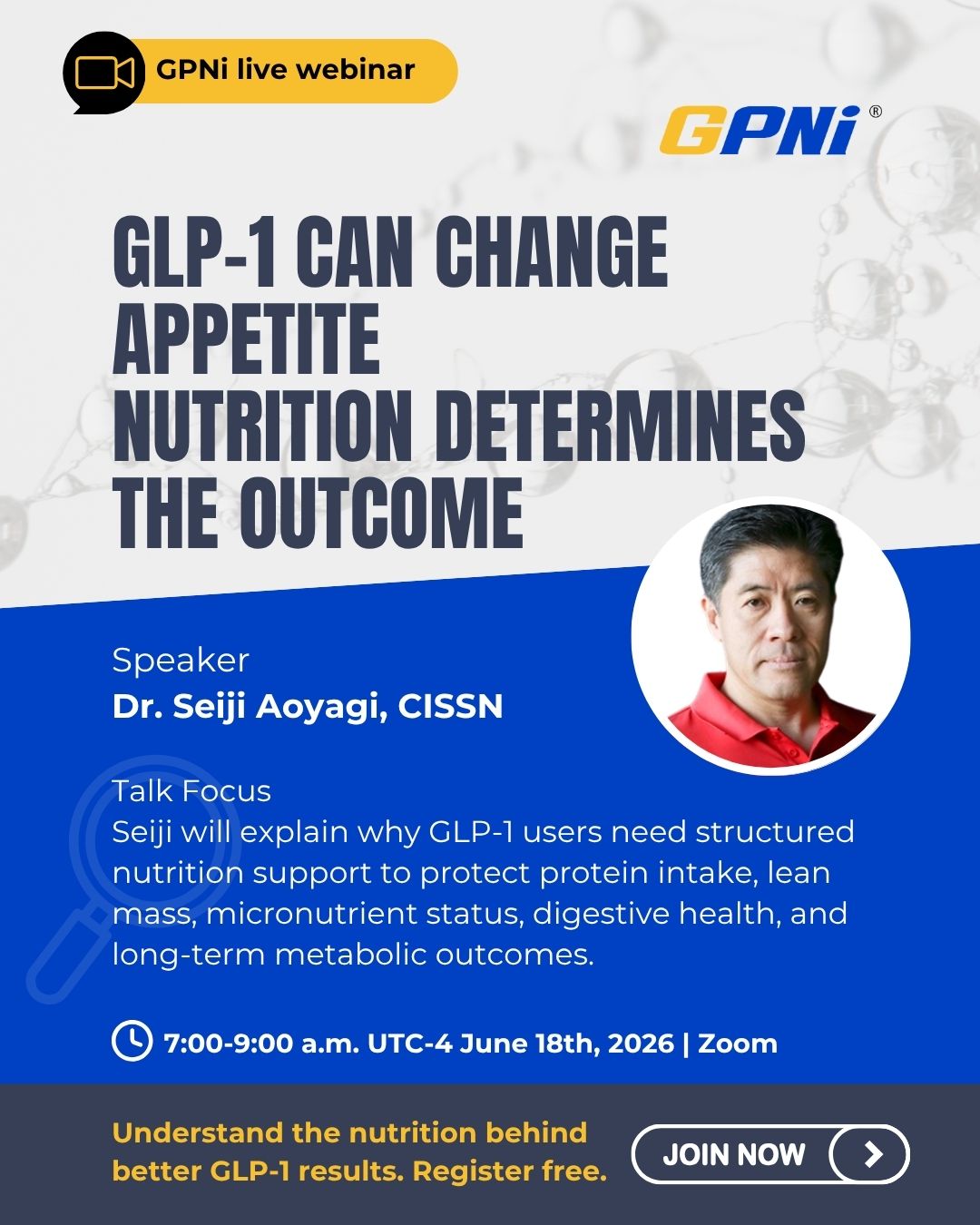
Dr. Seiji Aoyagi, CISSN
Dr. Seiji Aoyagi is the Chief Science Officer of NiHTEK and an owner and partner of GPNi Japan.
He has worked in the nutrition and supplement field for more than 30 years, across both clinical and sports nutrition. He has published extensively in the U.S. and Japan, contributed to book chapters, and holds four nutrition patents. He also helped secure approval for HMB as a supplement in Japan, introduced the TNT total nutrition therapy education program to teach clinical nutrition to physicians, and played a leading role in bringing Informed-Choice to Japan, where it became one of the most successful anti-doping certification initiatives in the industry. More than 450 products have now been certified.
His Talk: Optimizing GLP-1 Therapy: The Critical Role of Nutrition in Metabolic Health
GLP-1 can improve blood sugar control and support meaningful weight loss. These medications mimic the body’s natural GLP-1 signal after eating. They help stimulate insulin secretion when blood glucose is elevated, reduce glucagon release, slow gastric emptying, and increase fullness. That is why GLP-1 is often simplified on social media as a “makes you less hungry” weight-loss tool.
But it is important to be clear: GLP-1 medications are prescription drugs used in metabolic disease management. They should be used under medical supervision, based on a person’s health status, indication, risks, and long-term goals.
And eating less does not only mean eating fewer snacks or fewer high-calorie foods. For many people, appetite drops across the board. That is where the nutrition questions begin. When someone eats less, their intake of protein, dietary fiber, vitamins, minerals, and overall diet quality may also go down. Over time, this can affect body composition, digestive health, training performance, and metabolic health.
When food intake goes down, protein matters even more
During GLP-1 therapy, protein is one of the most important nutrients to watch.
During weight loss, long-term inadequate protein intake can increase the risk of lean mass loss. This is especially important for active individuals, people trying to improve body composition, and those who want to maintain metabolic rate and physical function.
But simply telling a GLP-1 user to “eat more protein” is often not realistic. Many people are not avoiding protein because they do not care. They simply cannot eat much. Meat may feel too heavy. A few bites of a meal may feel like enough. Even after training, hunger may not be very noticeable.
This is why Dr. Seiji will discuss more practical ways to support protein intake during GLP-1 nutrition management. Protein supplements, such as whey, casein, or well-formulated plant-based blends, can provide essential amino acids in a smaller volume of food. This can be especially helpful for people dealing with early fullness or nausea.
When used appropriately, often between meals or as part of a partial meal replacement, these supplements can help support muscle maintenance, improve satiety, and keep energy levels more stable.
Still, this approach needs to fit into the overall diet. It is not just about adding a scoop of protein powder. We still need to consider total daily intake, training load, body composition goals, digestive tolerance, timing between meals, and whether the supplement affects the next meal.
Fiber and digestive management should not be overlooked
One of the common side effects of GLP-1 medications is gastrointestinal discomfort.
Because GLP-1 slows gastric emptying, reduces appetite, and lowers food intake, some people may experience constipation, bloating, nausea, or disrupted eating patterns. This is where dietary fiber becomes especially important.
Fiber-rich foods such as vegetables, fruits, whole grains, and legumes can support digestive health and help improve bowel regularity. They can also work alongside the fullness that GLP-1 already creates. But in real life, fiber intake often drops too.
When appetite is low, people may eat fewer vegetables, fruits, whole grains, and legumes. Some may avoid these foods because they feel too filling or because they are worried about bloating. So the advice cannot simply be “eat more vegetables.”
We need to look at what the person can actually tolerate right now. Which foods make them uncomfortable? Should fiber be increased gradually? Are they drinking enough water? How should protein, meals, and snacks be arranged across the day?
Micronutrients are easy to underestimate
Another issue during GLP-1 therapy is micronutrient intake.
When someone is eating more, even a less-than-perfect diet may still cover part of their nutrient needs. But when food intake drops significantly, every meal matters more. Every bite needs to carry more nutritional value.
Protein foods, vegetables, fruits, whole grains, healthy fats, and foods rich in vitamins and minerals all need to be planned more intentionally. For people with long-term low intake, restrictive diets, or higher nutritional needs, supplements may also be helpful.
But supplementation should not come first. As sports nutritionists, we need to ask: What might this person be missing? Where is the gap coming from? Can it be improved through food first? Is additional supplementation needed? And does that supplement plan fit their medication use, health status, and long-term goals?
GLP-1 users do not simply need a “eat less and move more” approach.
For sports nutritionists and coaches, treating these clients like ordinary fat-loss clients may cause us to miss important details. When should we pay attention to low protein intake? When should we worry about lean mass loss? When should fiber and fluid intake be adjusted? When should the client be referred back to their physician? These are becoming more common, practical questions in sports nutrition.
What we really need to focus on is not just weight loss itself. It is how to help people preserve muscle, maintain nutrition, manage side effects, and improve metabolic health during GLP-1-assisted weight loss.
That is the core message Dr. Seiji Aoyagi will bring to the GPNi June Webinar.
Who Should Attend?
If you are a sports nutritionist, coach, or fitness professional, this webinar will help you build a stronger professional framework for understanding peptides.
If you are personally interested in body composition, recovery, and health optimization, it will help you separate what is genuinely useful from what is mostly market noise.
And for many people outside North America, this webinar carries an additional benefit. Peptides may already be a high-profile topic overseas, but there are still relatively few discussions that are structured, evidence-based, and practical. This is a chance to build your framework early, before the topic gets even louder.
GPNi is also exploring Zoom’s live captioning and translated caption options to make the event more accessible for a global audience. Depending on platform availability and event settings, this may include real-time subtitles and translated captions in multiple languages, potentially including Japanese, French, and others.
GPNi June Webinar: Dr. Seiji on the nutrition priorities in GLP-1 therapy
Dr. Seiji Aoyagi will present at the GPNi June Webinar:
Optimizing GLP-1 Therapy: The Critical Role of Nutrition in Metabolic Health
Date: June 18, 2026
Platform: Live worldwide on Zoom
Cost: Free to attend
CEC: 5
👉 Register here. For any inquiries, please contact edu@thegpni.com.











 Instagram
 Facebook
 YouTube
 Twitter
 Linkedin