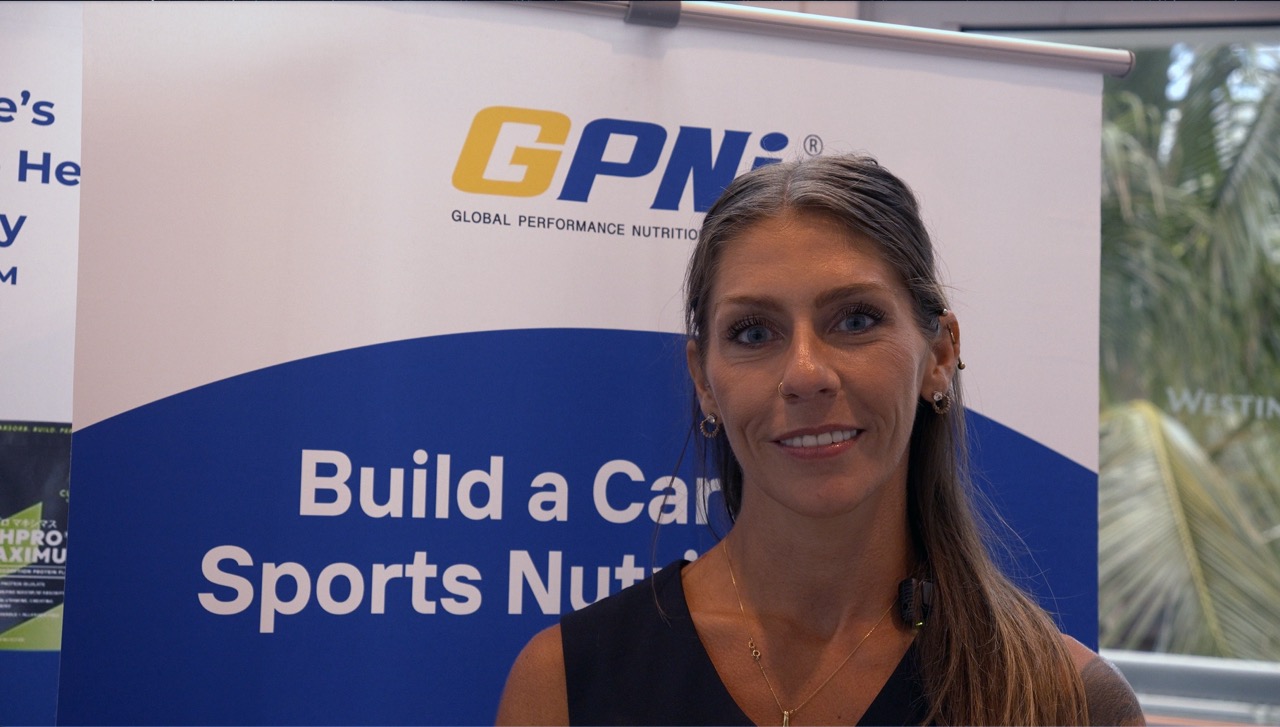
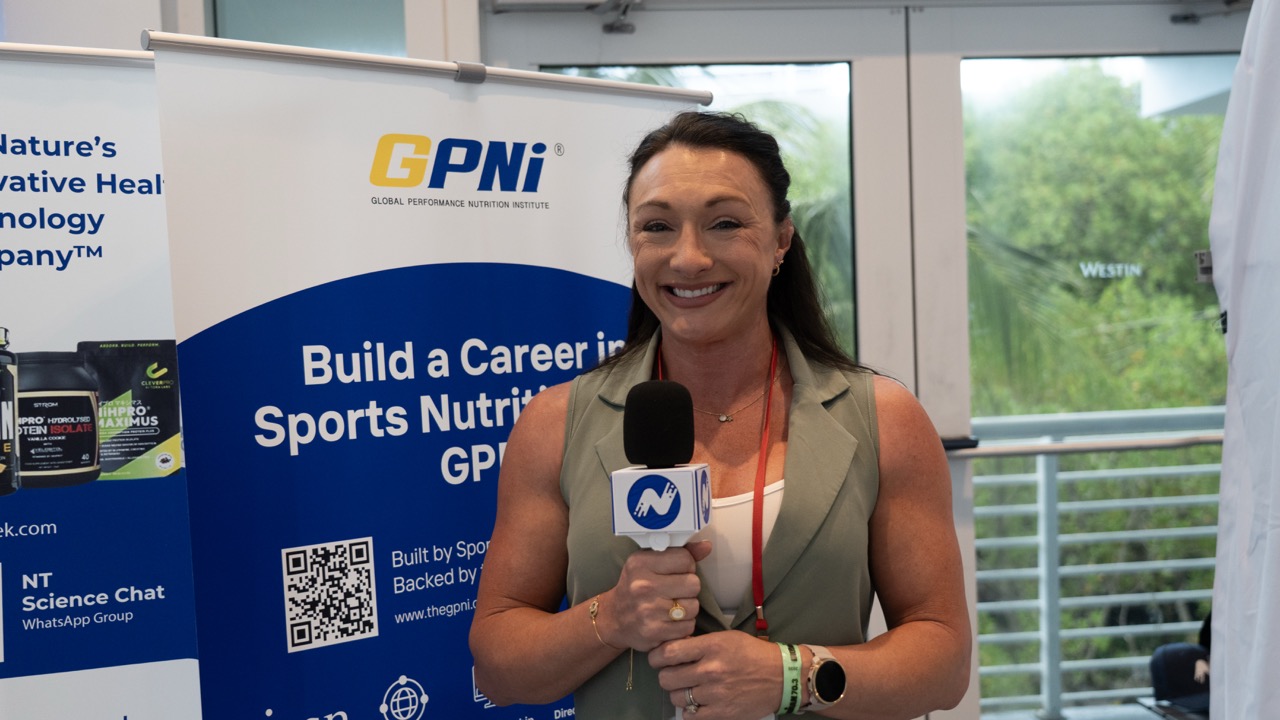
Recorded at the 23rd Annual ISSN Conference and Expo in Fort Lauderdale, this conversation brings a less visible—but essential—part of sports nutrition into view: the work required to move an ingredient from scientific promise to a product that can be made, delivered, and trusted.
“Never make yourself smaller to fit into somebody else’s box.”
— Genevieve Bruns
Genevieve Bruns
- Food science and flavour chemistry background
- Nutraceutical and life-science industry professional
- Experience connecting ingredients, suppliers, manufacturers, brands, and customers
- Works with Jebsen & Jessen Life Science
- Interested in sports nutrition trends, innovation, branded ingredients, and new clinical research
A strong nutrition product depends on science. It also depends on whether the right ingredients can be sourced reliably, supplied consistently, supported by quality and regulatory systems, and matched to what a manufacturer and its customers actually need.
Genevieve Bruns works where those requirements meet. Her career spans food science, flavour chemistry, technical understanding, customer relationships, and the commercial realities of the nutraceutical supply chain. It is a useful reminder that sports nutrition needs more than researchers, dietitians, and formulators. It also needs people who can connect the different organisations responsible for turning evidence into a finished product.
A Career That Began with Food and Flavour
Genevieve’s interest began long before she entered the nutraceutical industry. As a child, she was fascinated by cooking, ingredients, spices, and the way a flavour can bring back a memory. She watched cooking programmes, went shopping for ingredients, and tried to recreate what she saw at home.
That curiosity eventually became formal training in food science and flavour chemistry. Before moving into sales and broader industry work, she spent much of her early career in flavour laboratories. The progression makes sense: technical training helped her understand the material, while her interest in people and products helped her translate that knowledge into commercial relationships.
Her route also shows why an early interest does not need to point toward one obvious job title. Food science can lead into laboratories, sensory work, formulation, regulatory affairs, sourcing, technical sales, product development, or ingredient distribution. The subject provides a foundation; exposure reveals where that foundation can be used.
The Work Behind the Finished Product
Consumers see a supplement, beverage, or performance product on a shelf. Behind it sits a network of ingredient producers, distributors, manufacturers, quality teams, regulatory specialists, formulators, brand owners, and customers.
Genevieve’s work helps those groups communicate. A customer may begin with a performance goal or product concept, but the final solution must also account for ingredient availability, specifications, manufacturing requirements, timelines, market conditions, and continuity of supply. Technical knowledge matters because the wrong material—or the right material used in the wrong way—can undermine an otherwise promising concept.
Relationships matter for the same reason. Supply chains become stronger when suppliers understand a customer’s priorities and customers receive honest information about what is realistic. In this part of the industry, credibility is built through accuracy, consistency, responsiveness, and the willingness to solve problems over time.
Why ISSN Feels Like the Industry’s Round Table
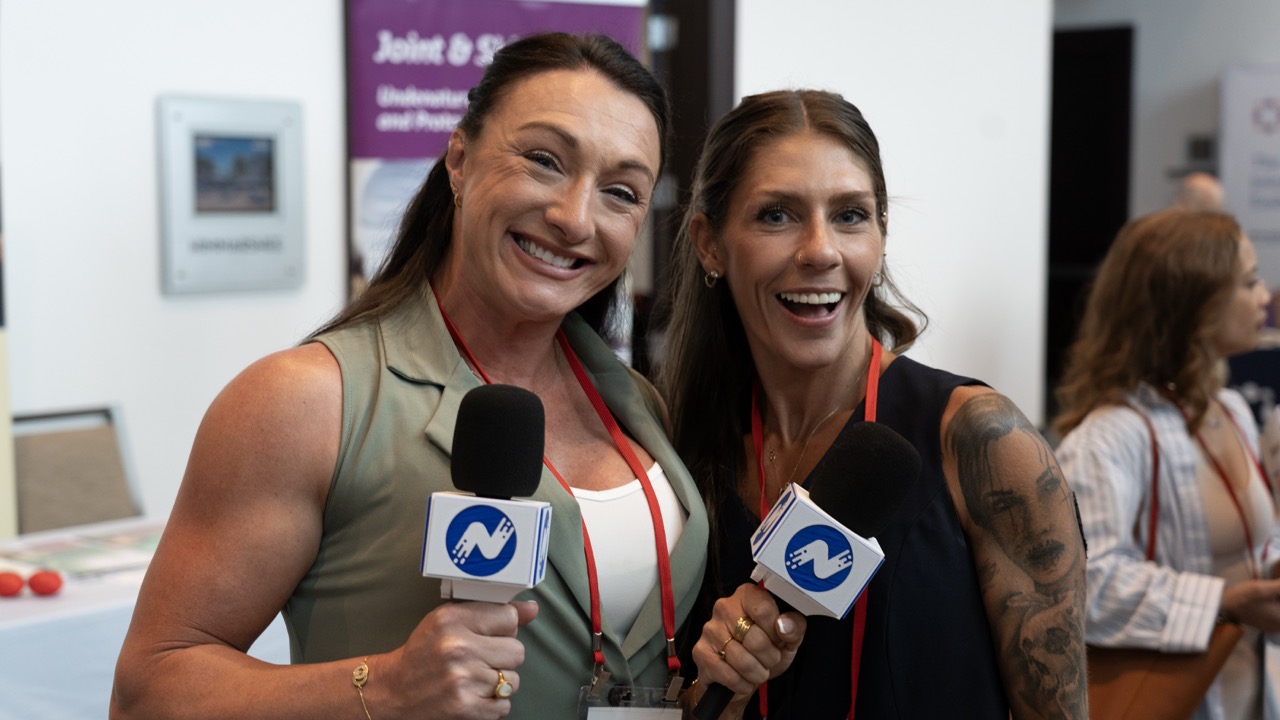
Genevieve first attended ISSN because of her interest in sports nutrition, trends, and innovation. She describes the conference as a meeting of minds: a place to hear about emerging ingredients, newly released clinical research, and the questions that may shape the market next.
Larger trade shows can reveal what the industry is selling. A scientific meeting helps explain why a concept may matter, how strong the evidence is, and where the uncertainties remain. For someone working between science and commercial application, that earlier view of the evidence is especially valuable.
She also values the energy of the community. Her approach is to arrive ready to listen—like a sponge—rather than assuming that professional experience means there is nothing left to learn. That humility is not a lack of expertise. It is one of the habits that keeps expertise current.
Build a Reputation That Travels with You
Genevieve’s advice is personal as well as practical: do not make yourself smaller to fit another person’s expectations. She thinks of herself as a professional brand whose integrity should remain recognisable regardless of the employer or role attached to her name.
That does not mean turning a career into constant self-promotion. It means being consistent about the qualities people experience when they work with you: honesty, curiosity, reliability, respect, and the courage to bring your own perspective to the room.
In a relationship-driven industry, reputation travels. Employers change, product categories evolve, and markets move. The trust associated with how someone communicates and follows through can remain valuable across all of them.
From Sports Nutrition Knowledge to Industry Impact
GPNi® education and ISSN-aligned certification can help learners understand the science that sits underneath the wider sports nutrition industry. That knowledge is relevant not only in athlete-facing practice, but also in ingredient companies, formulation, technical sales, product development, scientific communication, and customer education.
Education alone does not teach every operational detail of a supply chain. It does, however, make the conversations more informed. A professional who understands evidence, mechanisms, dosage, safety, and practical application is better equipped to ask useful questions and connect a product concept with a responsible solution.
Genevieve’s career widens the picture of what a sports nutrition profession can be. Some of its most important work happens before a product reaches an athlete—and depends on people who can keep science, supply, quality, and relationships moving together.
A Question for You
Which part of the nutrition industry would you most like to explore: research, formulation, sourcing, technical sales, product development, or customer education?
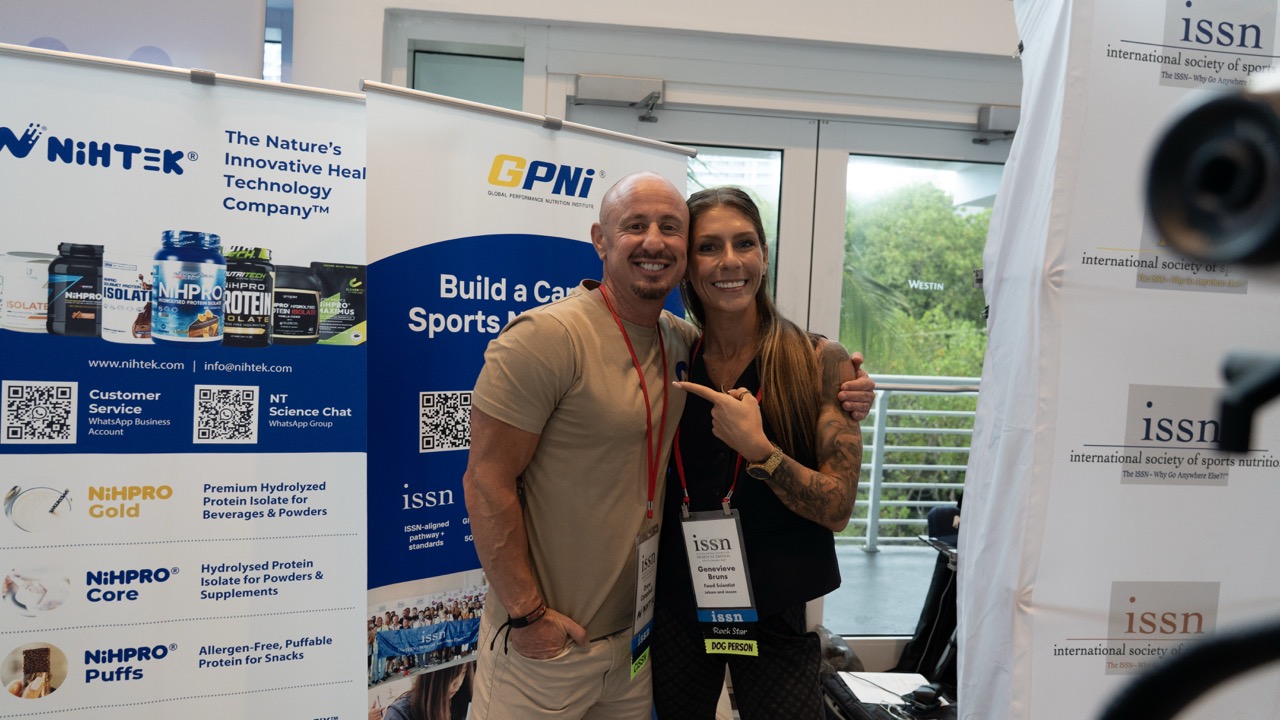
Follow Genevieve Bruns
Instagram: https://www.instagram.com/gymrat2labrat/
LinkedIn: https://www.linkedin.com/in/genevieve-bruns-617a32177/
Facebook: https://www.facebook.com/gen.bruns
From Learning to the Profession
GPNi® connects structured sports nutrition education and ISSN-aligned certification with the people, science, and professional community shaping the field. Education gains value when it helps learners enter real settings, ask better questions, apply evidence responsibly, and continue developing through practice and professional relationships.
Explore the pathways:










 Instagram
 Facebook
 YouTube
 Twitter
 Linkedin