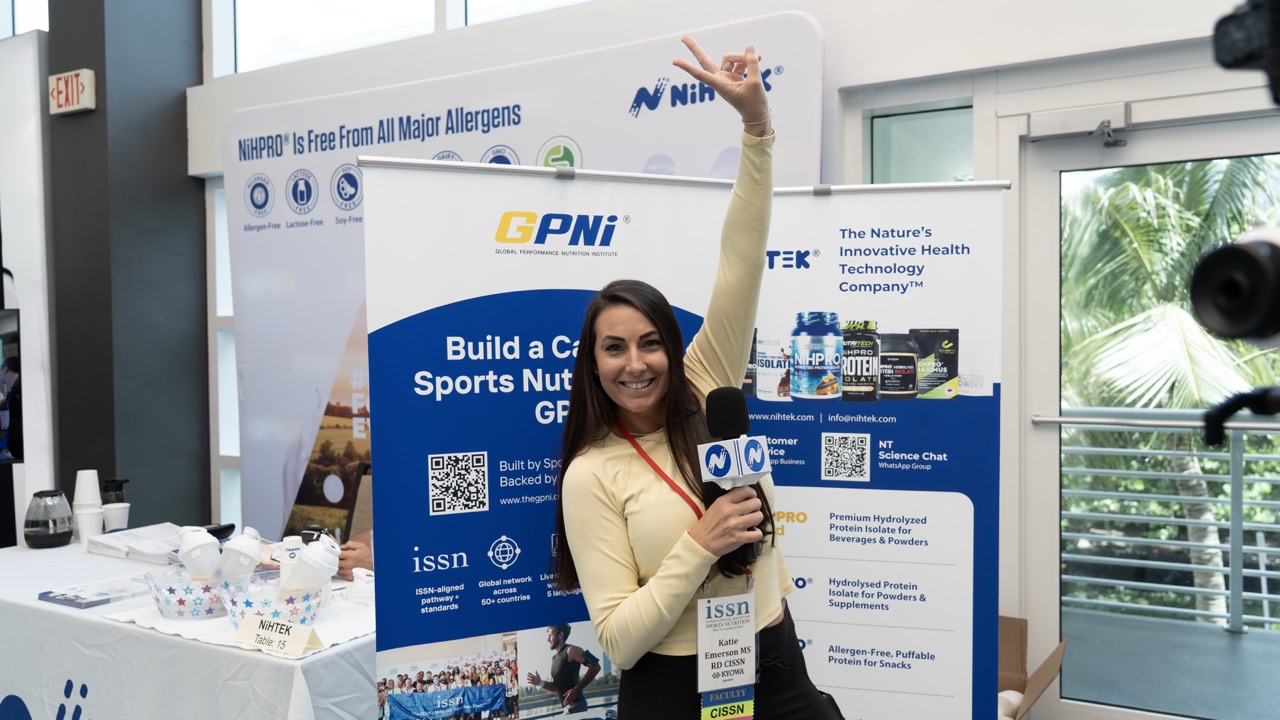
Recorded at the 23rd Annual ISSN Conference and Expo, this conversation follows a career that did not move in a straight line—and became stronger because Katie Emerson kept learning what each new setting could teach her.
“When you stop learning, you stop living.”
— Katie Emerson
Katie Emerson
- Senior Manager of Scientific and Regulatory Affairs at Kyowa Hakko USA
- Registered Dietitian and ISSN Certified Sports Nutritionist
- PhD candidate in Health Sciences, focused on Human and Sports Performance
- Master’s degree in Nutrition and Dietetics with a sports nutrition specialisation
- Experience in collegiate sports nutrition, clinical research, scientific communication, and evidence-based claims
Nutrition graduates are often shown a small set of conventional career options. Katie Emerson’s work demonstrates how much wider the profession can become.
Her career connects dietetics and sports nutrition with clinical research, scientific communication, product claims, ingredient science, and the commercial nutraceutical industry. The route was not planned from the beginning. It developed through a willingness to change direction, notice new questions, and keep learning.
A Non-Linear Route into Nutrition
Katie describes her path as confusing. She began in nursing school, decided it was not right for her, and moved into teaching. She loved teaching science, but still felt she had not found the setting where she wanted to stay.
Food became the next point of curiosity. She wanted to understand how what we eat may influence cognitive health, sports performance, metabolic health, and longevity. That interest led her into dietetics—not simply because she liked food, but because she wanted the scientific tools to judge what she was putting into her own body and recommending to others.
Changing direction can feel like lost time when it is happening. In retrospect, Katie’s earlier experiences were not wasted. Teaching strengthened her ability to communicate science, while nursing exposed her to clinical questions. Both became useful in a role that requires research to be explained accurately to different audiences.
The Athlete Questions That Led toward Ingredient Science
During her graduate education at Nova Southeastern University, Katie gained experience supporting collegiate athletes. Their questions about supplements encouraged her to look more deeply at ingredients, mechanisms, dosage, evidence, and the quality of product claims.
That curiosity helped move her toward scientific affairs. The work can include developing scientific content, assessing evidence, supporting responsible claims, communicating with commercial and regulatory teams, and overseeing preclinical or clinical studies.
It is a role built around translation. Researchers, product teams, health professionals, customers, and consumers may all need different levels of detail, but the underlying evidence cannot change simply to suit the audience. Scientific affairs professionals must understand the research well enough to make it useful without making it say more than it can support.
Research Can Reach People in Unexpected Ways
Katie’s research has also explored nutrition education delivered through Instagram among firefighters. The project brought together evidence-based content, health behaviour, communication, and the realities of reaching a population outside a conventional clinic.
That work reflects a larger shift in nutrition practice. Information is no longer delivered only through consultations, lectures, or printed resources. Social platforms can extend access, but they also increase the responsibility to communicate clearly, avoid oversimplification, and distinguish education from unsupported certainty.
The skill is not merely knowing nutrition. It is understanding what the audience needs, how they receive information, and which outcomes can be measured to determine whether communication is actually helping.
Why Continuing to Learn Changes the Career
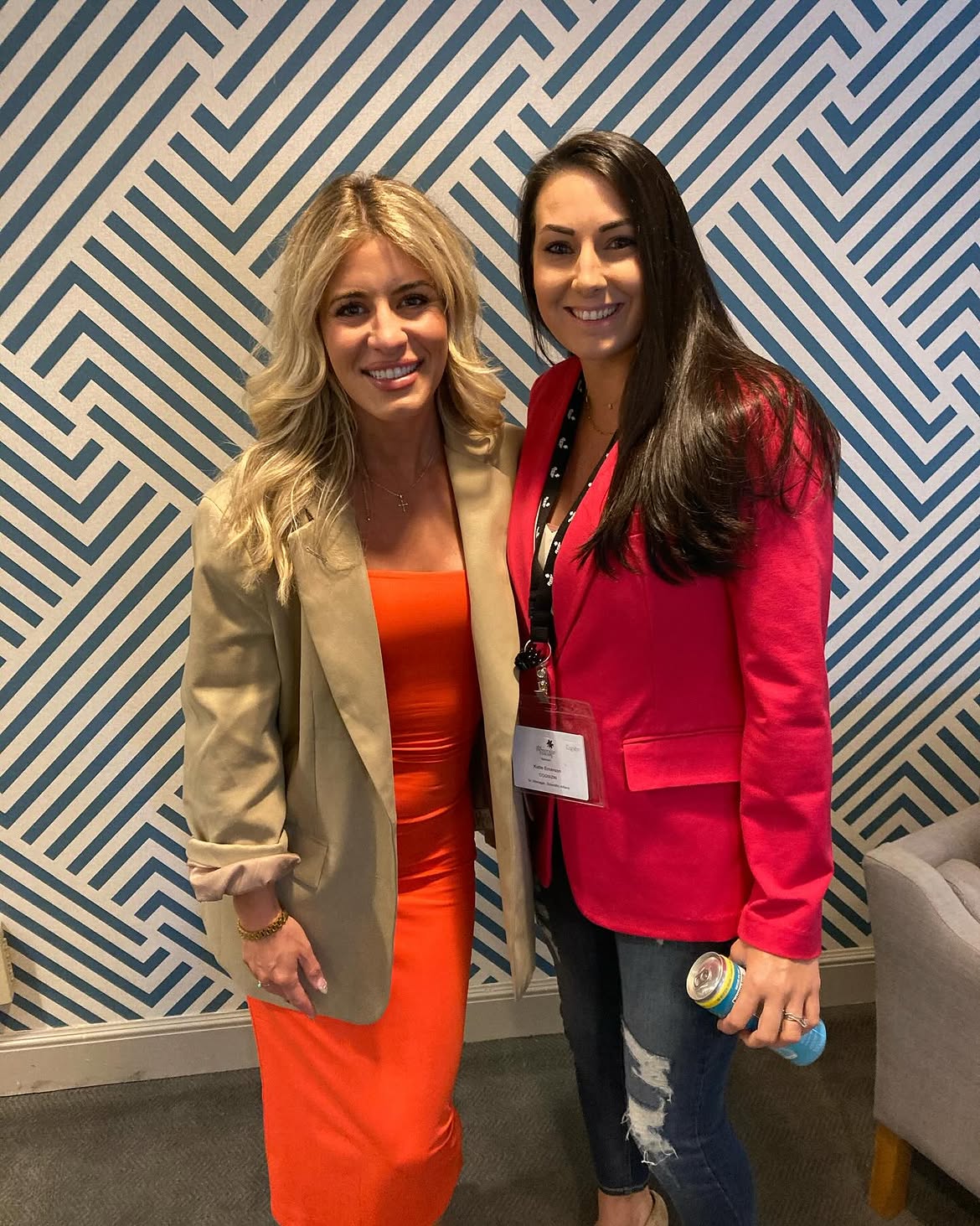
Katie first attended ISSN as a student because her professors encouraged her to go. She returns because the conference creates conversations that are difficult to reproduce elsewhere. Researchers and practitioners bring different perspectives to the same question, turning the meeting into both a learning environment and a place to test ideas.
She values that questions are welcomed. Productive scientific communities do not make people feel foolish for asking; they challenge them to think more carefully. For Katie, that is part of why learning remains central to professional growth.
Qualifications provide a foundation, but they cannot contain an entire career. Evidence changes, new roles emerge, and real work exposes gaps that were invisible in the classroom. Continued education and professional dialogue allow a qualification to keep generating value rather than becoming a completed item on a résumé.
Look Beyond the Three Traditional Doors
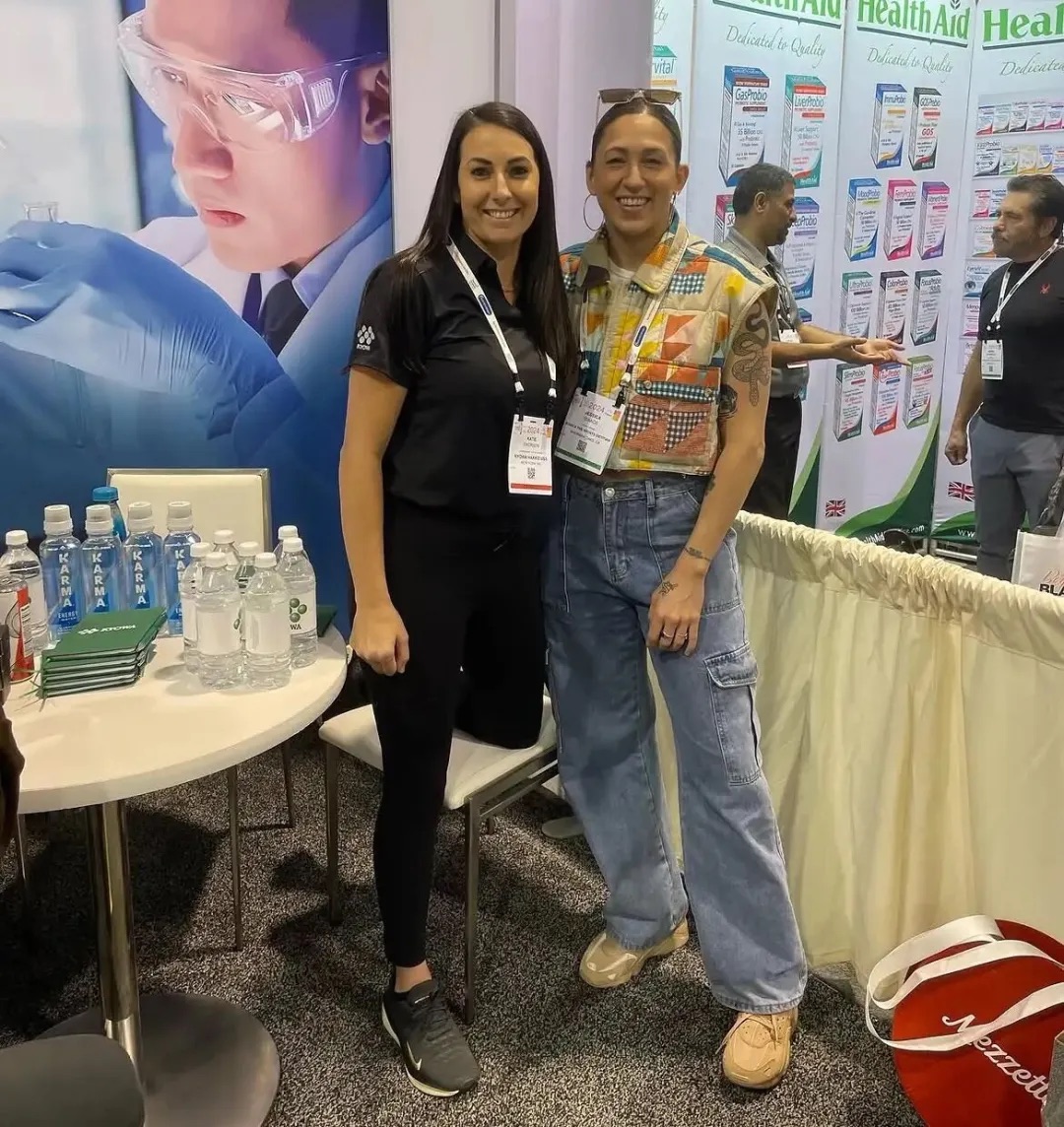
Katie encourages dietitians to look beyond hospital, community, and food-service roles. Those are important pathways, but they are not the only places nutrition knowledge can have an impact.
Research and scientific affairs can influence the evidence behind ingredients, how studies are designed, how claims are communicated, and which products reach practitioners and consumers. Other professionals may move into education, regulatory affairs, medical writing, innovation, or product development.
GPNi® and ISSN-aligned certification can deepen the sports nutrition knowledge that supports these directions. The larger lesson from Katie’s career is not that everyone should enter scientific affairs. It is that a degree should expand professional choices—not persuade someone that only three are available.
A Question for You
Where would you most like to apply your nutrition knowledge: athlete support, research, scientific affairs, education, product development, or another setting?
Follow Katie Emerson
Instagram: https://www.instagram.com/thepicky_sports_rd/
LinkedIn: https://www.linkedin.com/in/katie-m-emerson/
Facebook: https://www.facebook.com/katie.emerson.984
From Learning to the Profession
GPNi® connects structured sports nutrition education and ISSN-aligned certification with the people, science, and professional community shaping the field. Education gains value when it helps learners enter real settings, ask better questions, apply evidence responsibly, and continue developing through practice and professional relationships.
Explore the pathways:









 Instagram
 Facebook
 YouTube
 Twitter
 Linkedin