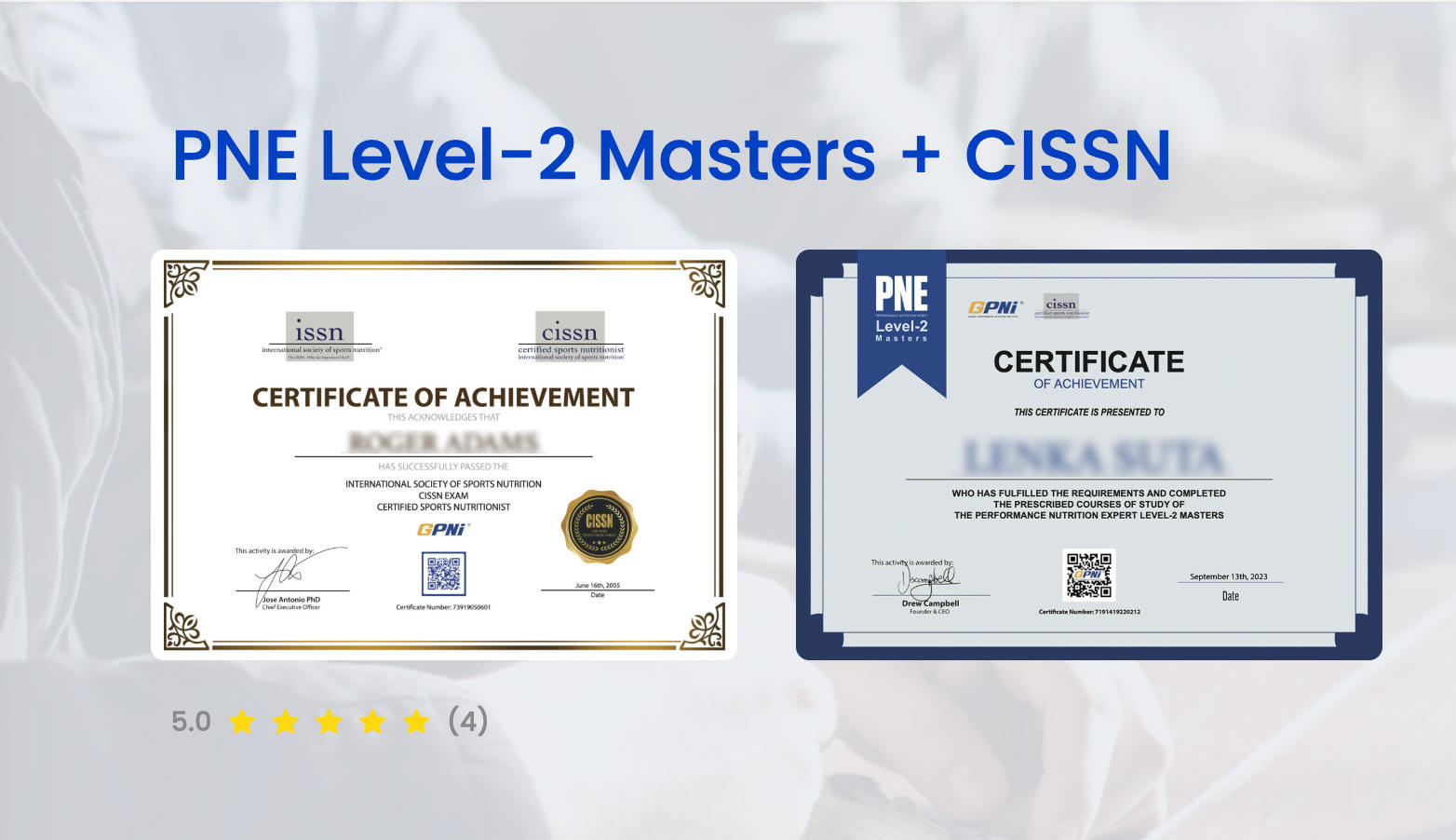
A practical comparison of two double-certification routes.
Choosing a sports nutrition course should begin with an honest question: what do you need to be able to understand and do when you finish?
GPNi offers two structured online pathways linked to ISSN certification: PNE Level-1 with the ISSN-SNS®, and PNE Level-2 Masters with the ISSN-CISSN®. Both are designed around evidence-based sports nutrition, but they differ in depth, workload and the level of applied analysis expected.
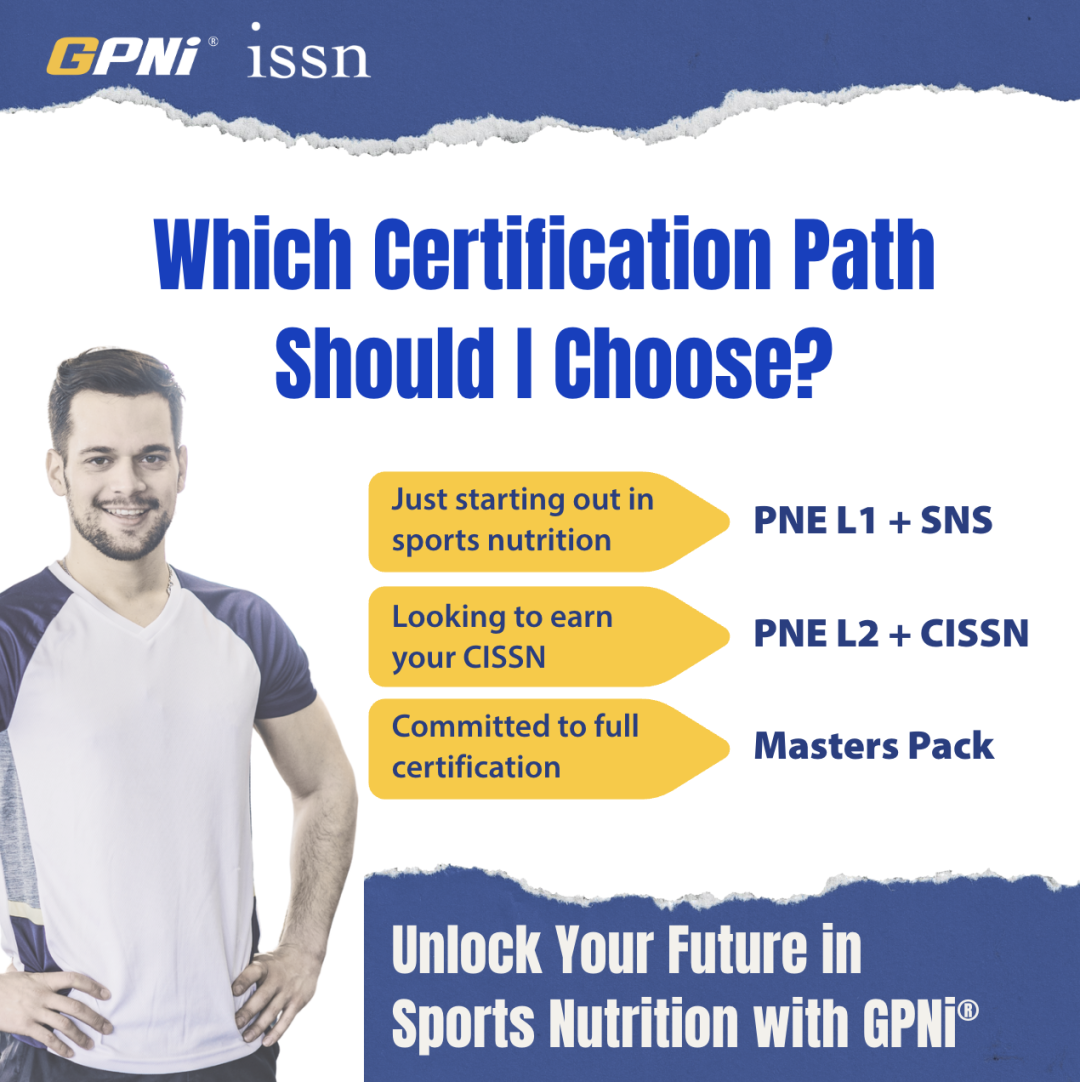
The right option is not automatically the highest level. It is the pathway that matches your starting point, professional goals, available study time and readiness for the corresponding ISSN examination.
PNE Level-1 + ISSN-SNS®
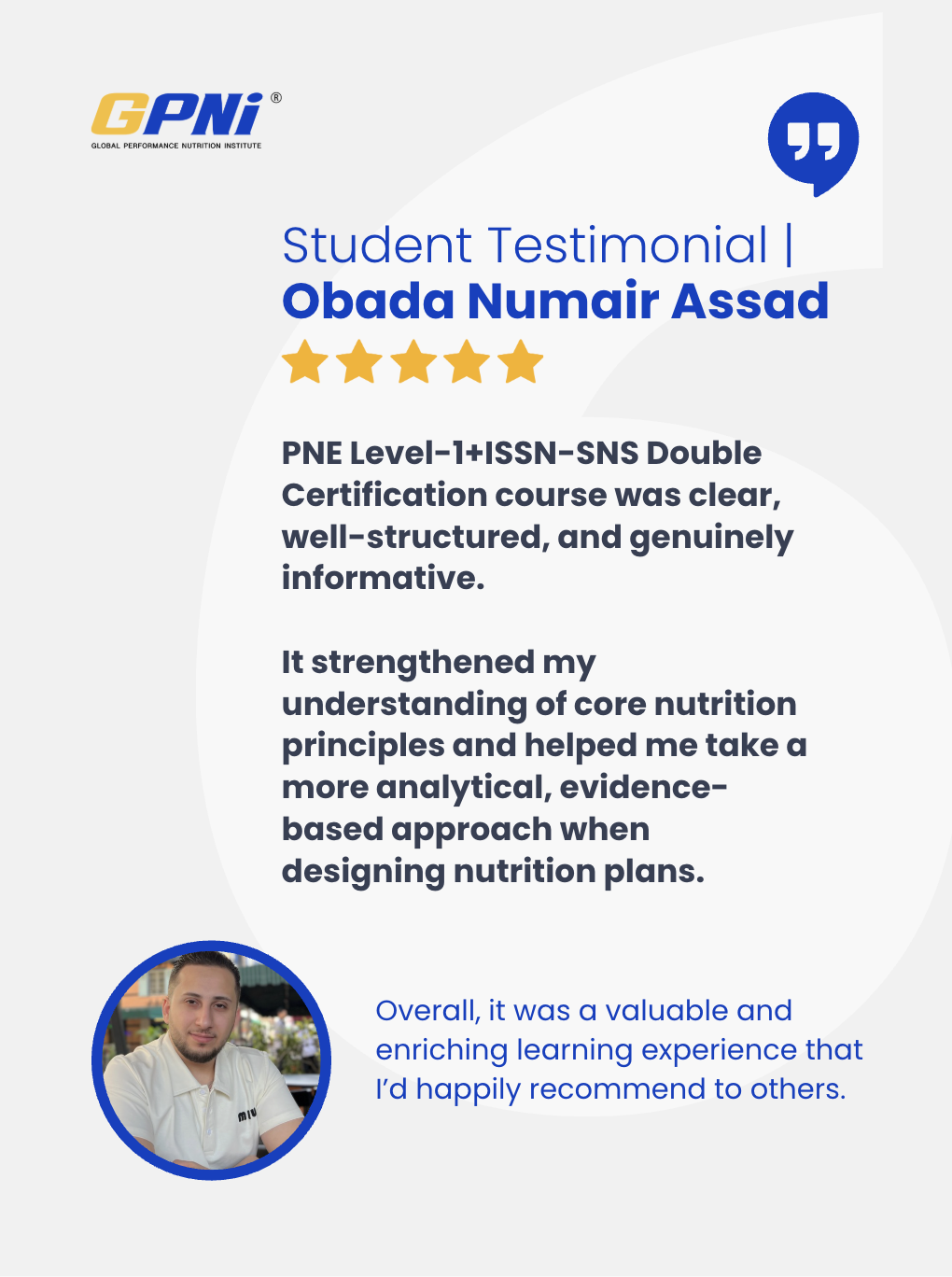
PNE Level-1 is the foundational route. GPNi’s current course information describes more than 70 hours of learning and a structured progression through core sports nutrition concepts. The pathway combines GPNi’s PNE Level-1 learning with preparation for the ISSN Sports Nutrition Specialist examination.
It may suit coaches, trainers, active-health professionals, students and others who want a more organised, science-based grounding in nutrition for exercise and performance. It can also help someone discover which areas deserve deeper study before committing to advanced work.
A good fit if you want to:
- Build or refresh a broad sports nutrition foundation.
- Understand key concepts in fuelling, hydration, body composition, recovery and supplements.
- Improve the quality of general nutrition conversations within your professional scope.
- Prepare systematically for the ISSN-SNS examination.
PNE Level-2 Masters + ISSN-CISSN®
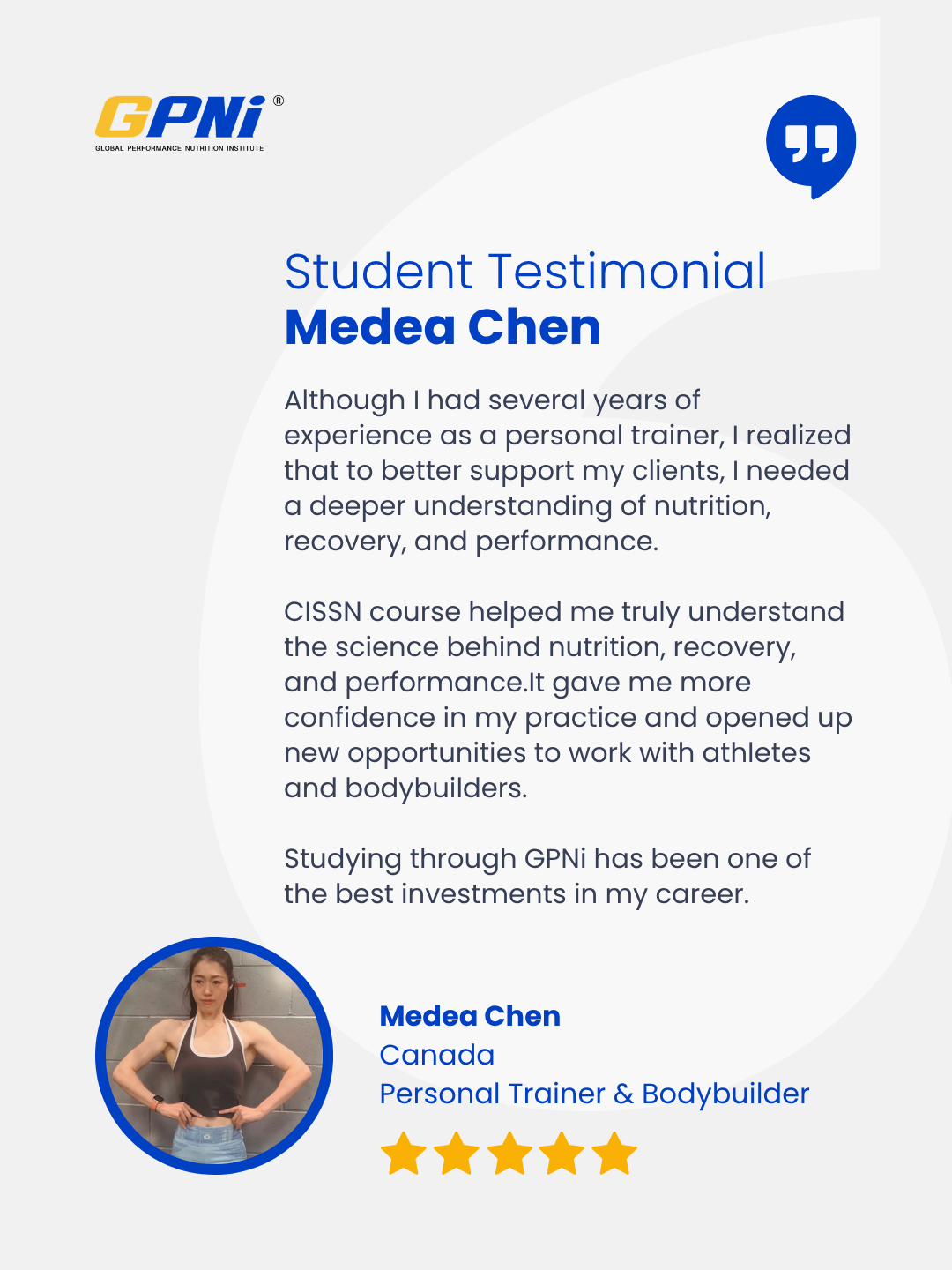
PNE Level-2 Masters is the advanced route. GPNi’s current course information describes more than 132 hours of content, with case studies, real-world scenarios and professional report writing used to develop deeper application. It is paired with preparation for the ISSN Certified Sports Nutritionist examination.
This pathway may suit professionals or graduates who already have a solid science base and want a more demanding exploration of evidence, assessment and programme reasoning. The CISSN exam is a separate ISSN credential with its own current eligibility, examination and renewal requirements; candidates should review the official ISSN page before enrolling.
A good fit if you want to:
- Study sports nutrition at greater technical depth.
- Work through applied cases rather than rely on fact recall alone.
- Practise interpreting evidence and communicating professional recommendations.
- Prepare systematically for the ISSN-CISSN examination.
Compare the pathways by readiness—not ego
A higher-level course is not useful if the learner is missing the foundation needed to engage with it. Equally, an experienced practitioner may need more than an introductory overview. Review the module list, sample material, assessment approach and estimated hours. Be realistic about how much focused study you can sustain.
Ask four questions. First, how strong is my current understanding of anatomy, physiology, nutrition and research? Second, which decisions do I need to make more confidently? Third, which credential is relevant to my intended role or market? Fourth, do local regulations require a separate degree, licence or registration for the services I hope to provide?
What double certification does—and does not—mean
Completing the GPNi learning and successfully meeting the respective ISSN certification requirements can provide two connected markers of development. It does not mean one course grants every professional right in every country. Titles, nutrition practice and medical nutrition therapy are regulated differently across jurisdictions.
The goal should be capability with credibility: a stronger understanding of the science, better applied reasoning and a credential you can describe accurately.
Your next step
Read both current course pages and both ISSN certification pages. Compare content, hours, examination details and renewal requirements. If your foundation is still developing, Level-1 can create structure. If you are ready for more advanced analysis and workload, Level-2 Masters may be the better fit.
Choose for the professional you are working to become—not simply for the longest title.
A seven-day decision process
Day one: read both GPNi course pages in full. Day two: read the current ISSN-SNS and CISSN requirements. Day three: list your existing education and experience. Day four: compare your available weekly study time with the published course hours. Day five: write the professional decisions you want the programme to help you make. Day six: check local scope and employer expectations. Day seven: choose—or identify the information still missing.
Keep screenshots or dated notes of the course and certification details you relied on. Requirements can change, and an accurate personal record makes later planning easier.









 Instagram
 Facebook
 YouTube
 Twitter
 Linkedin