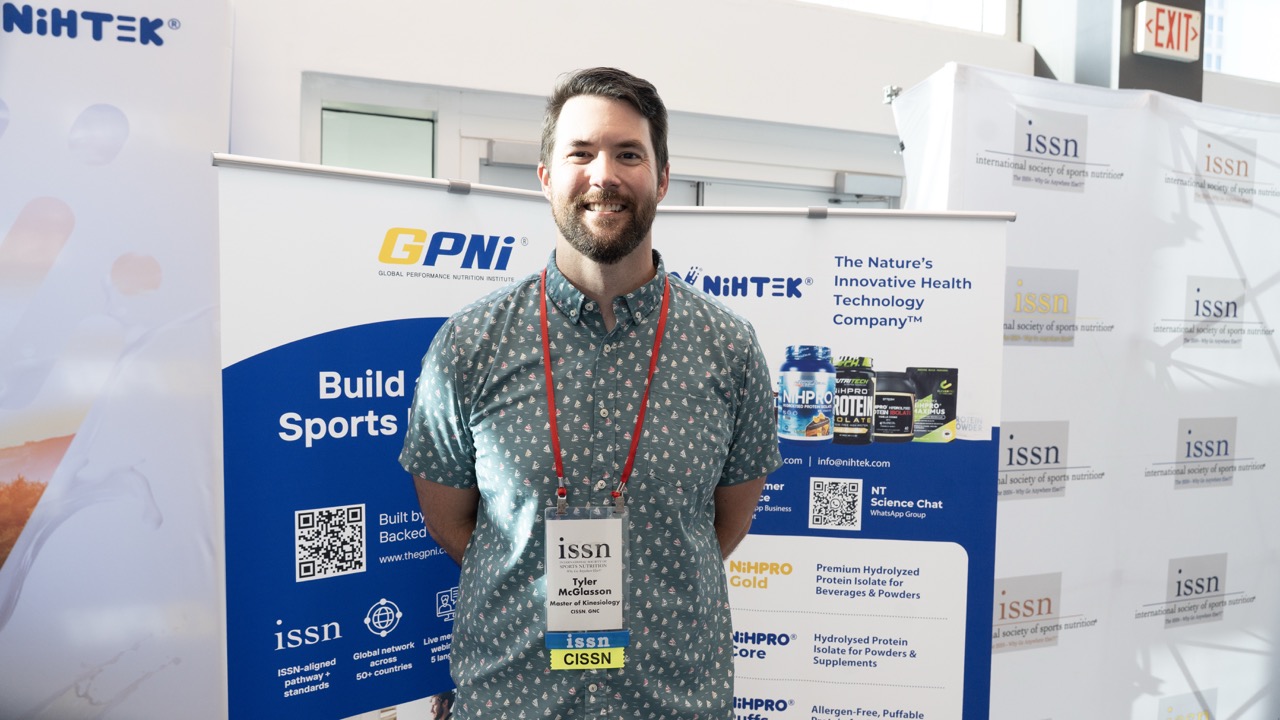
Regulatory work is often described as the department that says no. Tyler McGlasson began his career reviewing ingredient science and checking that products and claims stayed within the rules. He eventually realised that the same knowledge could be used earlier—and more creatively—to help build better products from the start.
“It is a lot more fun putting things together to help people than striking words off a page.”
— Tyler McGlasson
Tyler McGlasson
- Sports nutrition and supplement industry professional with GNC
- Background in regulatory compliance and product creation
- Master of Kinesiology and Certified Sports Nutritionist
- Previously worked with Bodybuilding.com
- Approximately seven years of participation in ISSN conferences
Compliance Taught Him How to Read the Evidence
Tyler entered the industry through regulatory compliance. His job required him to examine the science behind ingredients and determine whether products and communications met relevant requirements.
That work developed a useful discipline: separate what an ingredient might do from what the evidence and regulations allow a company to say. It also exposed him to recurring mistakes—claims stretched beyond the study population, doses that did not match the research, or wording that turned uncertainty into certainty.
Compliance can feel restrictive when it appears only at the end of development. Used earlier, it becomes part of product quality. Teams can choose ingredients, doses, formats, and claims that align more closely from the beginning.
Moving from Reviewing Products to Building Them
Tyler wanted to apply his knowledge creatively. Product creation allowed him to move from removing unsupported language to assembling formulas intended to solve a real need.
The shift did not make regulatory thinking less important. It made that thinking more constructive. A development team must still ask whether the product is safe, whether the evidence is relevant, whether the ingredient level is meaningful, and whether the benefit can be communicated honestly.
Creativity in sports nutrition is therefore bounded creativity. The most responsible innovation happens when science, regulation, consumer needs, sensory experience, manufacturing, and commercial reality are considered together.
Challenging the “Unregulated Industry” Assumption
Tyler recognises the stigma surrounding supplements: the idea that the industry is unregulated and concerned only with profit. His experience has shown him teams of people who care deeply about delivering high-quality products and ensuring they work as represented.
That does not mean the sector is free from poor practice. It means criticism should be precise. Strong companies invest substantial time and effort in quality, substantiation, compliance, and testing. Professionals entering the field can help raise standards by understanding both the science and the responsibilities attached to it.
Why He Keeps Returning to ISSN
Protein and creatine are central to sports supplementation, and Tyler sees ISSN as one of the best places to follow the research directly. The conference helps him move beyond summaries and hear how researchers interpret current findings.
He also reflects candidly on education. Surrounded by PhDs and senior scientists, he sometimes wishes he had pursued further academic study. The point is not that every product professional needs a doctorate. It is that deeper education expands the questions someone can ask and the level at which they can participate.
A Question for You
Where should regulatory and scientific teams become involved in product development: at final approval, or from the first concept meeting?
Follow Tyler McGlasson
Instagram: https://www.instagram.com/therealtylermcg/
LinkedIn: https://www.linkedin.com/in/tyler-mcglasson-mk-cissn-552b58132/
From Learning to the Profession
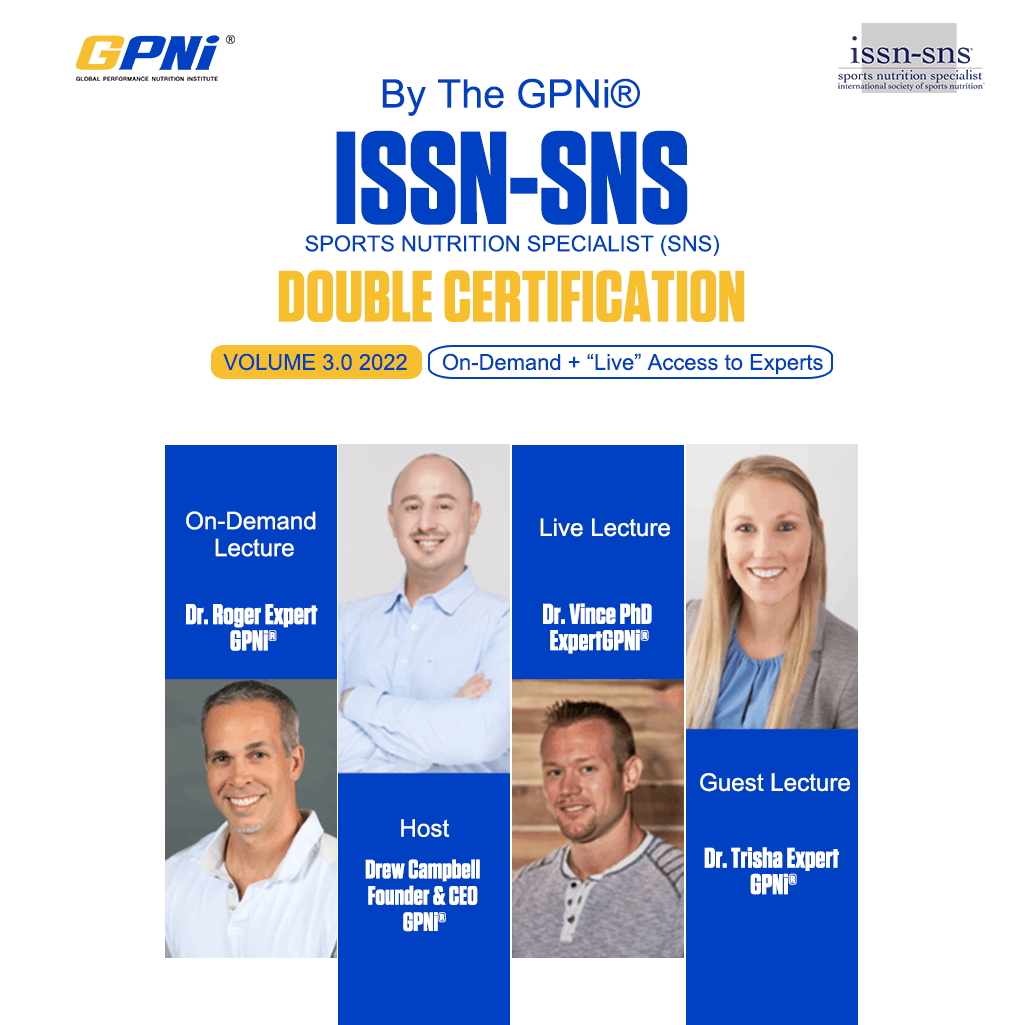
GPNi® connects structured sports nutrition education and ISSN-aligned certification with the people, science, and professional community shaping the field. Education gains value when it helps learners enter real settings, ask better questions, apply evidence responsibly, and continue developing through practice and professional relationships.
Explore the pathways:












 Instagram
 Facebook
 YouTube
 Twitter
 Linkedin