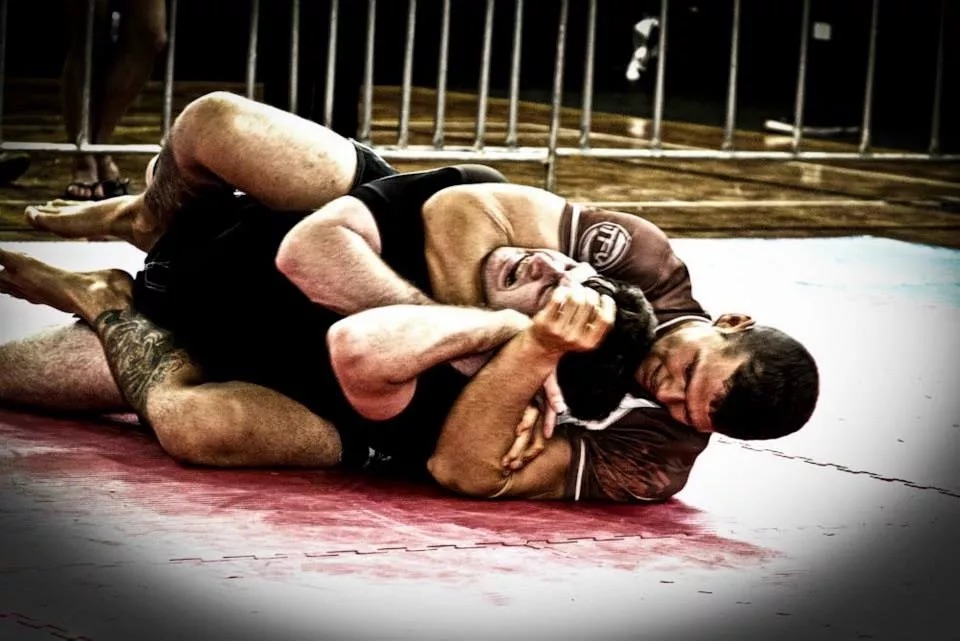
Dr. Reid Reale has spent his career studying what happens before and after a combat athlete makes weight—then turning that science into decisions that have to work in the real world.
A fighter steps onto the scale and makes weight. To the outside world, the job looks finished. For Dr. Reid Reale, that number is often where the most important questions begin.
What did the athlete have to do to get there? How much fluid was lost? How will the body respond over the next several hours? What should the athlete drink and eat—and what can they realistically tolerate when nerves, fatigue and a compressed timeline enter the room?
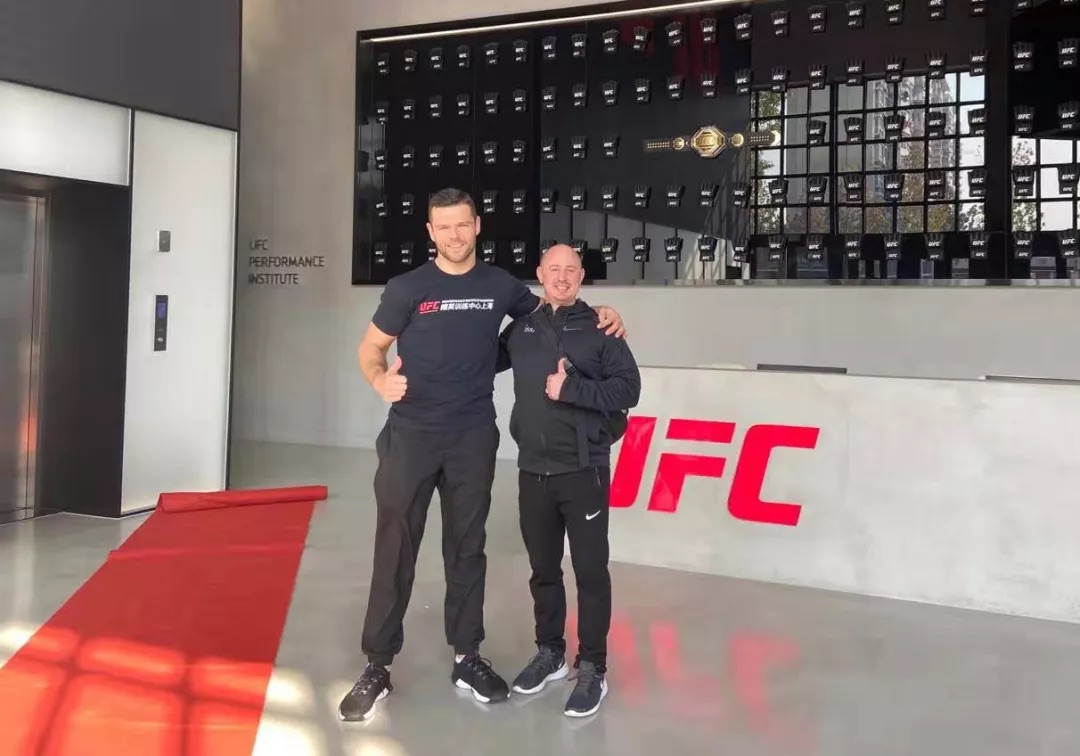
Reid has built a career in that space between the plan on paper and the athlete standing in front of him. Now Director, Performance Nutrition & Research Scientist at the UFC Performance Institute Shanghai, he is known internationally for his work in combat-sports nutrition, acute weight loss, body composition and recovery.
On 22 September, he will join Drew Campbell and Mark Timms for a live GPNi webinar and podcast about combat sport, professional development and life in China. It is an opportunity to hear not only what Reid studies, but how the scientist, practitioner and martial artist in him learned to work together.
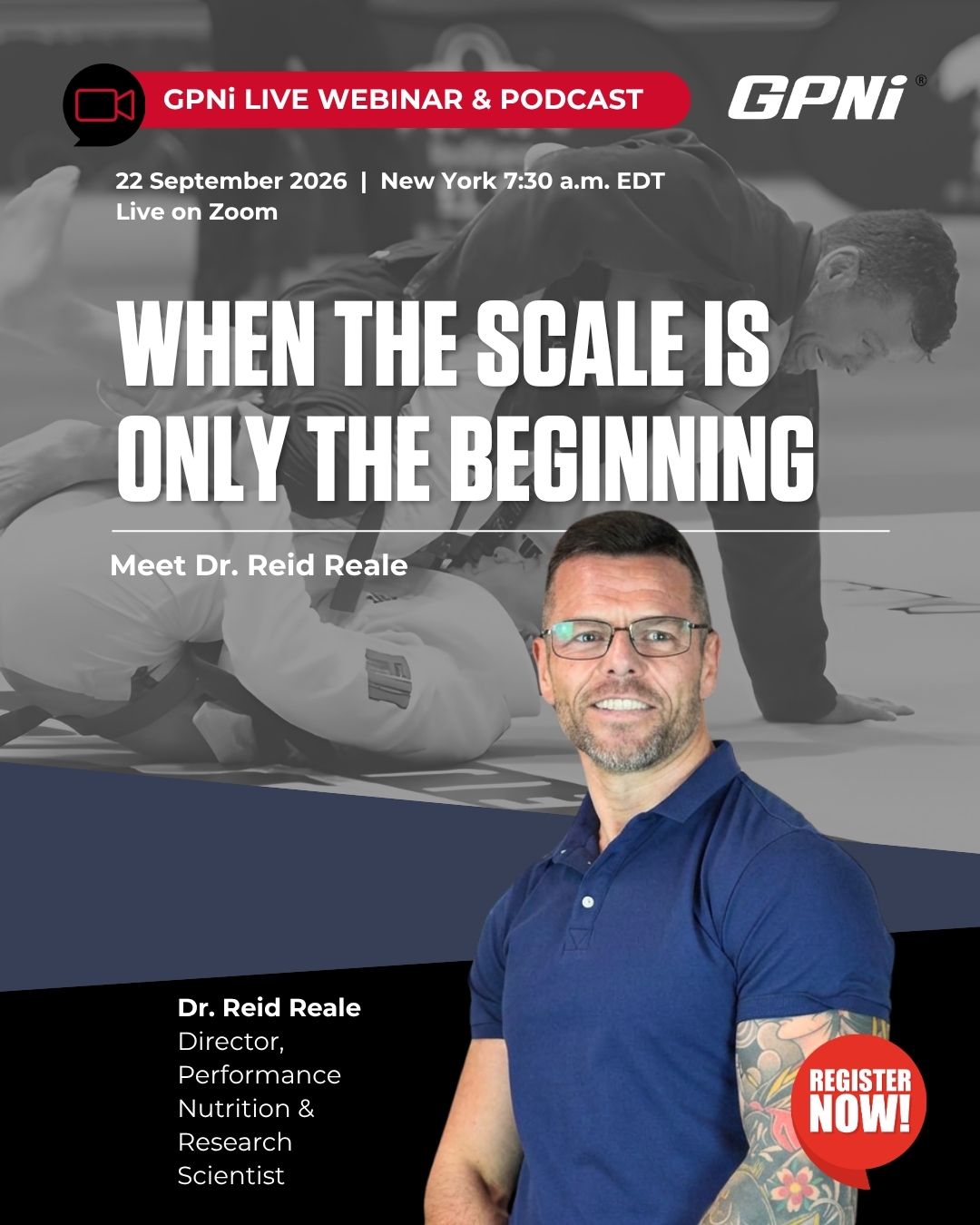
Where High-Stakes Practice Met Research
Reid's career developed close to the athletes whose problems he wanted to understand. At the Australian Institute of Sport's Combat Centre, he worked with athletes in judo, boxing, wrestling and taekwondo, including preparations around the Rio 2016 Olympic Games. At the same time, his doctoral research focused on weight management in combat sports.
That setting matters. Research questions look different when the person in front of you has a fixed weigh-in, an international competition schedule and years of habits already in place. A strategy may be physiologically sound and still fail if it is too complicated, unfamiliar or poorly timed. Reid's work has helped bring structure to an area once dominated by tradition, secrecy and last-minute improvisation.
His widely cited research on acute weight loss and post-weigh-in recovery does not reduce athletes to percentages. It asks how body composition, dehydration, food and fluid intake, competition format and individual tolerance interact—and how practitioners can make better decisions when the margin for error is small.
Beyond the Australian Institute of Sport
Reid later joined the Gatorade Sports Science Institute as a Senior Scientist, conducting research and supporting elite athletes across different sporting environments. The move expanded his view beyond weight-category sport and added work in areas including energy expenditure, hydration and sleep.
He has also contributed education to dietitians, universities, professional audiences and the International Olympic Committee's Diploma in Sports Nutrition. Yet his career has never been divided neatly into 'research' and 'practice'. Each side tests the other. Research sharpens the questions he asks in practice; working with athletes exposes where general recommendations need more nuance.
The Scientist Who Also Knows the Mats
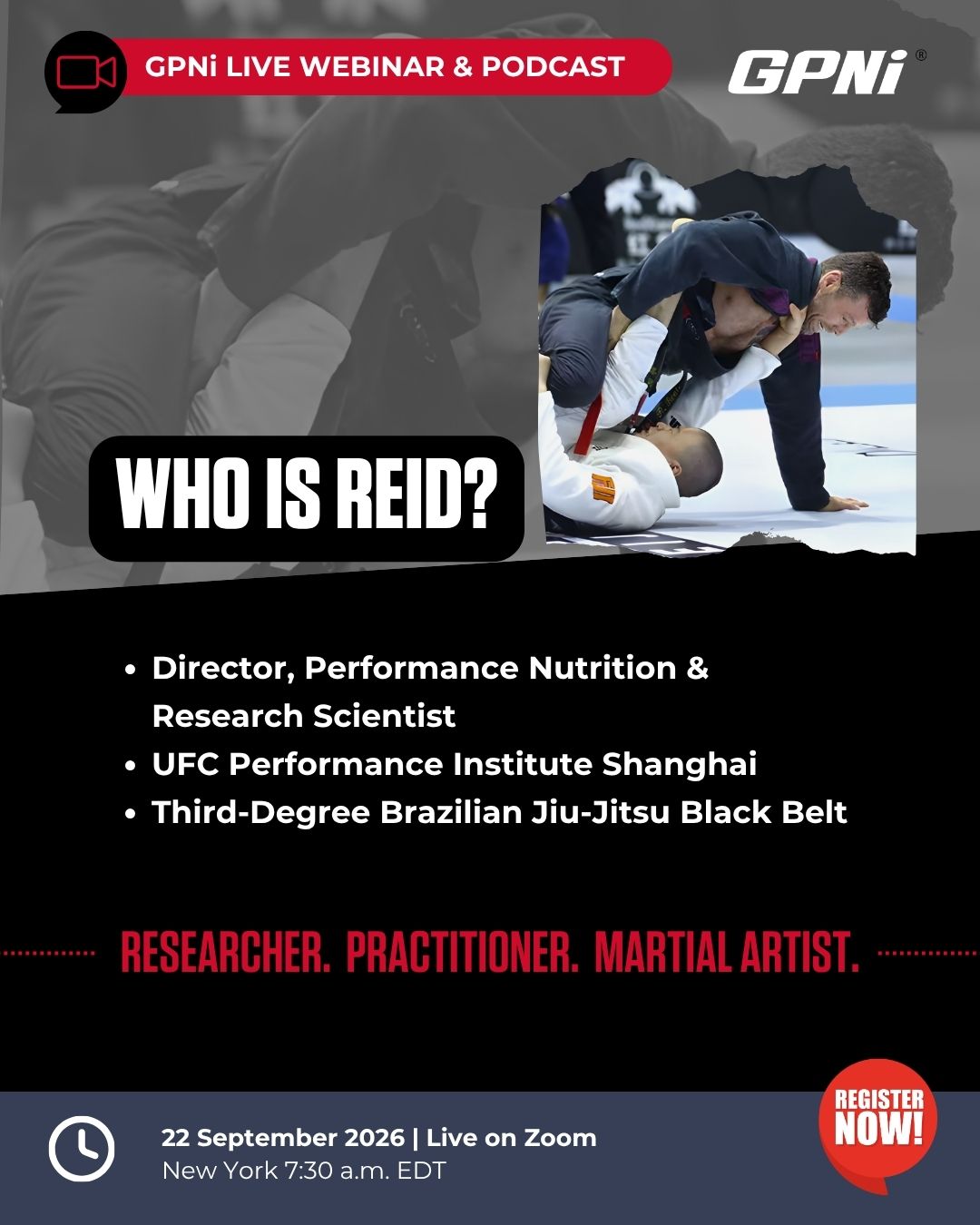
There is another reason Reid's perspective feels different. He is not only a nutrition professional who works around combat athletes; he is a lifelong martial artist and third-degree Brazilian jiu-jitsu black belt.
That does not replace scientific evidence, but it changes the conversation. He understands why athletes become attached to familiar routines, how combat-sport culture shapes decision-making and what it means to train while managing fatigue, body mass and competition pressure. He knows that athletes do not experience a nutrition plan as a spreadsheet. They experience it while drilling, sparring, travelling, sleeping badly or trying to stay calm before competition.
The strongest practitioners are often translators. They translate evidence into action, data into language an athlete can use, and a perfect protocol into the best workable decision for that person on that day.
A New High-Performance Chapter in Shanghai
Reid's path has moved from Melbourne to Canberra, then to the United States and Shanghai. At the UFC Performance Institute, his role brings nutrition and research into a multidisciplinary system supporting MMA athletes.
Working in China adds another layer. Food culture, communication, athlete backgrounds and professional expectations all shape how expertise is applied. A recommendation cannot simply be exported unchanged from one country to another. It must make sense within the athlete's daily life.
That ability to adapt is part of what makes an international career valuable. Moving countries does more than enlarge a CV; it challenges assumptions that once felt universal.
What Reid's Story Can Teach the Next Generation
For students and early-career practitioners, Reid's path demonstrates that credibility is built in layers. Formal education matters. Research literacy matters. Measurement skills matter. So do communication, humility and enough time around athletes to recognise when the textbook answer is not yet a practical one.
The webinar will explore his route through elite sport and research, what people misunderstand about making weight, how nutrition fits within a wider performance team, and what he has learned from building a career across Australia, the United States and China.
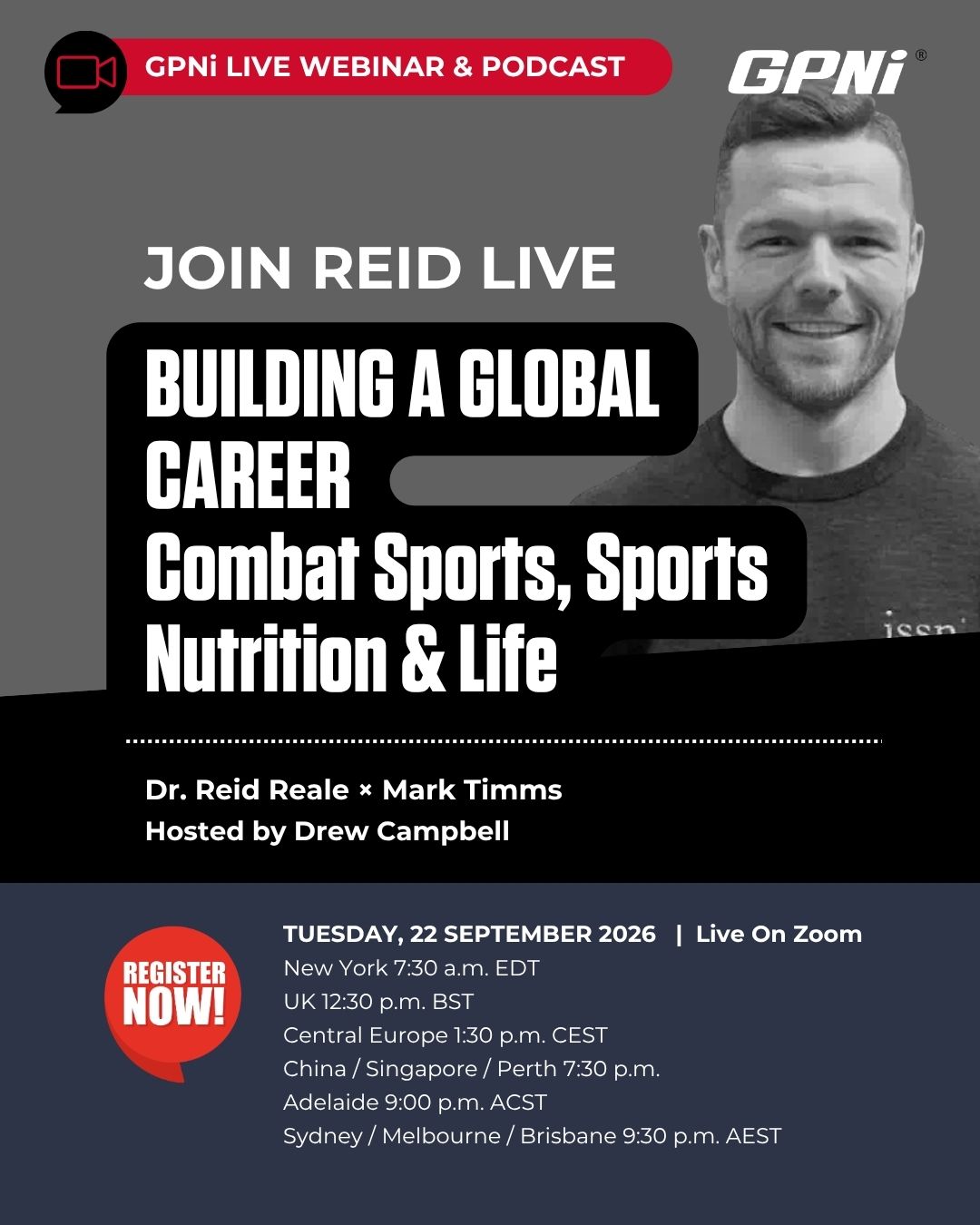
Join Reid Live
Dr. Reid Reale will appear in Building a Global Career: Combat Sports, Sports Nutrition & Life in China, hosted by Drew Campbell with Mark Timms.
- Date: Tuesday, 22 September 2026
- Time: 7:30 p.m. China / 7:30 a.m. New York / 12:30 p.m. UK / 1:30 p.m. Central Europe
- Platform: Live worldwide on Zoom
- Registration: https://us06web.zoom.us/meeting/register/PtL7R-_nT_uCKvTRonHOVQ
- Please contact edu@thegpni.com
Making weight may take only a moment on the scale. Understanding everything that led to that moment—and everything that must happen next—can take a career. On 22 September, Reid will take us behind the number.










 Instagram
 Facebook
 YouTube
 Twitter
 Linkedin