
For decades, endurance nutrition has returned to the same question: do athletes need carbohydrates to perform at their best, or can they train the body to rely more heavily on fat?
It is an old debate, but it has not gone away. If anything, it has become more relevant. Marathon runners, cyclists, triathletes, ultra-endurance athletes, coaches, and sports nutritionists are still trying to understand where low-carbohydrate, high-fat diets fit into performance nutrition.
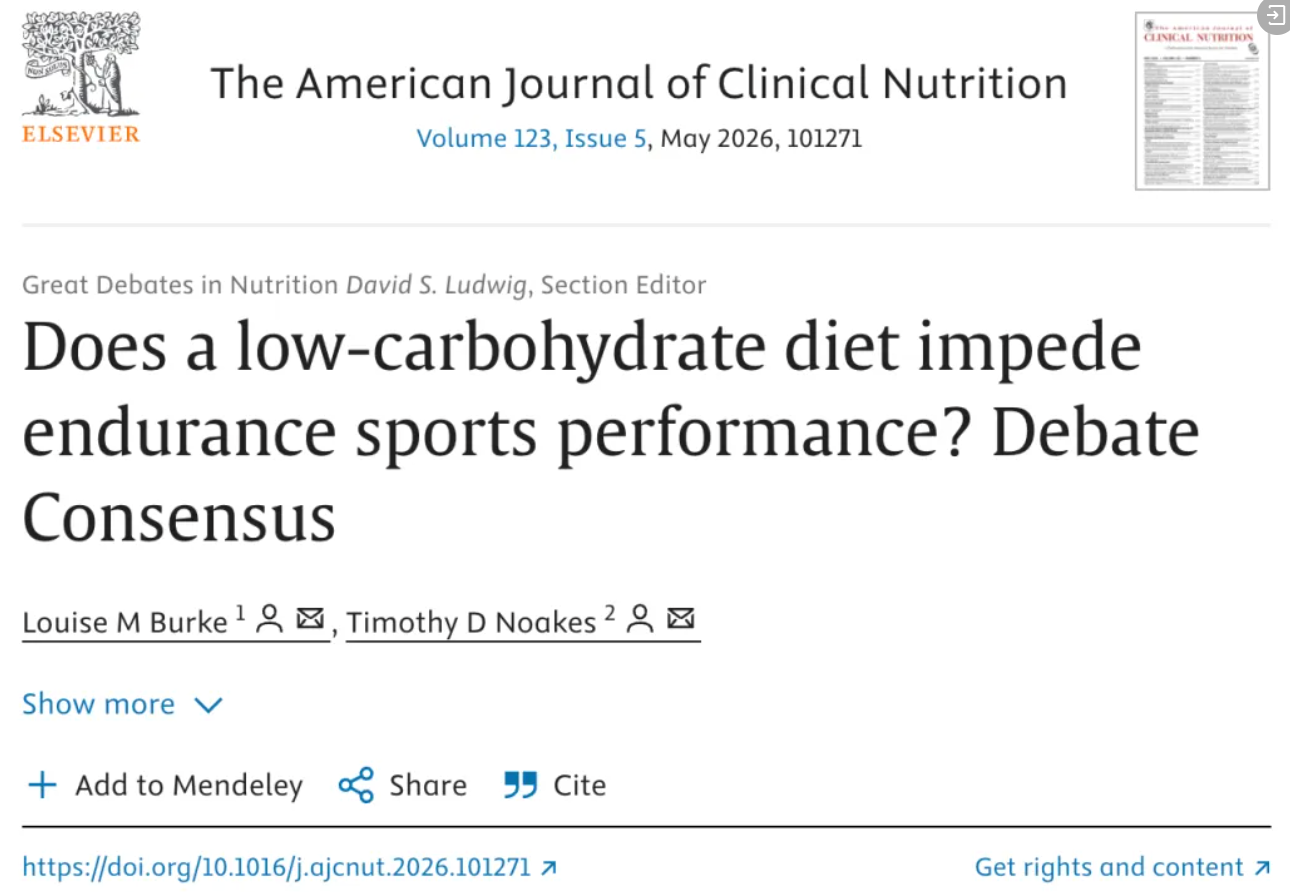
A recent Great Debates in Nutrition series in The American Journal of Clinical Nutrition brought this question back into focus. Louise Burke and Timothy Noakes, two highly influential voices in sports nutrition and exercise science, debated whether a low-carbohydrate diet impedes endurance sports performance.
This is not a simple “carbs are good” versus “carbs are bad” discussion. The more interesting question is this:
Can improving fat oxidation actually translate into better endurance performance, or does carbohydrate availability still matter when athletes need to sustain speed, power, and tactical intensity?
At GPNi, this is exactly the kind of debate we think is worth discussing. Not because it gives a neat answer, but because it reminds us how performance nutrition should be practiced: with context, evidence, and individualization.
Why This Debate Matters
The appeal of low-carbohydrate endurance nutrition is easy to understand.
The human body stores far more energy as fat than as carbohydrate. Even a lean athlete carries a large amount of potential energy in body fat, while glycogen stores are limited. From that perspective, it seems logical to ask whether an athlete could become less dependent on carbohydrate by adapting to a low-carbohydrate, high-fat diet.
If the body can burn fat at a higher rate, perhaps the athlete can preserve glycogen, avoid “bonking,” and maintain performance for longer.
That is the central promise of low-carbohydrate adaptation.
But endurance performance is not simply about having access to a large fuel tank. It is also about how quickly and efficiently that fuel can be converted into movement. A long-distance race is not always performed at one steady, comfortable pace. Real competition includes hills, surges, overtaking, breakaways, technical terrain, heat, fatigue, and sometimes a final sprint.
This is where the debate becomes more complicated.
Fat is abundant. Carbohydrate is limited. But carbohydrate is also a highly effective fuel when intensity rises.
What the Low-Carb Argument Gets Right
Low-carbohydrate, high-fat diets can substantially increase fat oxidation during exercise. That part is not really controversial.
When carbohydrate intake is restricted and fat intake is increased, the body adapts. Over time, skeletal muscle becomes better at using fat as a fuel. In some studies, trained athletes following low-carbohydrate, high-fat diets have demonstrated very high rates of fat oxidation during exercise.
This is important.
For lower-intensity endurance exercise, especially when the event lasts for many hours, improving the ability to use fat may be useful. Some ultra-endurance athletes also report that a lower-carbohydrate approach can help reduce reliance on frequent high-carbohydrate feeding during long events.
There is also a fair criticism of overly rigid high-carbohydrate thinking. Not every session requires high carbohydrate availability. Not every athlete needs the same fueling strategy. A recovery run, an easy aerobic ride, a long low-intensity session, and a race-pace workout are not the same nutritional problem.
So yes, there is value in training metabolic flexibility. There is value in understanding fat oxidation. And there is value in questioning whether all athletes should be told to follow the same high-carbohydrate template all the time.
Low-carb advocates are right to push the field beyond simplistic carbohydrate loading advice.
But that does not mean low-carbohydrate diets are automatically the best strategy for performance.
Where the Concern Begins: Fuel Economy
Louise Burke’s key argument is not that fat cannot provide energy. Of course it can.
Her concern is whether fat can provide energy economically enough when performance demands are high.
Carbohydrate produces more usable energy per unit of oxygen than fat. That may sound like a small biochemical detail, but for an endurance athlete working near their sustainable limit, oxygen is not unlimited. When an athlete is already close to the ceiling of aerobic capacity, needing more oxygen to produce the same amount of energy may matter.
This is one reason why low-carbohydrate adaptation can look impressive metabolically but less convincing in performance terms.
An athlete may burn much more fat after adapting to a ketogenic or very low-carbohydrate diet. But if that comes with a higher oxygen cost at race-relevant speeds, the athlete may not actually move faster. In fact, for high-level endurance athletes, even a small reduction in exercise economy can be meaningful.
This is one of the most important lessons from the race walking studies led by Burke and colleagues. In elite athletes, low-carbohydrate, high-fat adaptation increased fat oxidation, but it also impaired exercise economy and did not support the same performance improvements seen with high or periodized carbohydrate availability.
That finding is not a dismissal of fat metabolism. It is a reminder that metabolism and performance are related, but they are not identical.
A bigger flame does not always mean a faster race.
Timothy Noakes’ Counterargument: Is Glycogen Really the Limiting Factor?
Timothy Noakes approaches the question differently.
He argues that traditional sports nutrition may have placed too much emphasis on muscle glycogen as the central limiter of endurance performance. From his perspective, the critical issue in prolonged submaximal exercise may be the maintenance of blood glucose rather than the absolute preservation of muscle glycogen.
This leads to a different practical interpretation.
If a low-carbohydrate-adapted athlete can rely heavily on fat for energy, and if a small amount of carbohydrate during exercise is enough to prevent exercise-induced hypoglycemia, then perhaps large carbohydrate intakes are not always necessary.
This argument deserves attention.
It challenges the assumption that more carbohydrate is always better. It also highlights that exercise fatigue is not caused by one mechanism. Blood glucose, liver glycogen, muscle glycogen, central nervous system function, gastrointestinal tolerance, pacing, temperature, hydration, and perception of effort can all influence performance.
However, the key question remains: what kind of performance are we talking about?
A steady submaximal laboratory test is not the same as a competitive race. A long ultra-endurance event is not the same as a marathon, Olympic-distance triathlon, road cycling race, or high-intensity mountain stage. Recreational completion and elite racing also have different demands.
This is where the low-carb argument can become too broad if it is applied without context.
The Middle Ground: Carbohydrate Availability, Not Carbohydrate Absolutism
The most useful takeaway from this debate is not that all endurance athletes must eat high carbohydrate diets. It is also not that low-carbohydrate diets are the future of endurance sport.
The better takeaway is that athletes need appropriate carbohydrate availability.
That means matching carbohydrate intake to the demands of training and competition.
For high-intensity sessions, long workouts with quality targets, competition, multi-session training days, or rapid recovery between events, carbohydrate availability is often important. It supports training quality, helps maintain intensity, and provides a fuel source that is efficient when oxygen demand is high.
For selected low-intensity sessions, some athletes may deliberately train with lower carbohydrate availability to stimulate metabolic adaptations. This does not mean they should race under-fueled. It means carbohydrate can be periodized, just like training load.
This “fuel for the work required” approach is more flexible than both extremes.
It avoids the mistake of treating carbohydrate as something athletes must always maximize. It also avoids the mistake of assuming that because fat oxidation can be increased, carbohydrate becomes unnecessary.
What About Ultra-Endurance Athletes?
Ultra-endurance is where the discussion becomes especially nuanced.
In very long events, intensity is often lower, fat oxidation becomes increasingly important, and gastrointestinal tolerance may limit how much carbohydrate an athlete can consume. Some ultra-endurance athletes may benefit from improving fat oxidation and becoming less dependent on constant carbohydrate feeding.
But even here, the answer is not simply “go low-carb.”
Ultra-endurance athletes still need to manage energy intake, carbohydrate availability, hydration, sodium, gastrointestinal symptoms, and recovery. The International Society of Sports Nutrition’s position stand on single-stage ultra-marathon nutrition supports an individualized and periodized strategy. It also notes that moderate-to-high carbohydrate intake remains important for many athletes, while selected low-carbohydrate training sessions may have a role in enhancing fat oxidative capacity.
That is a balanced position, and it is probably where much of the practical field is heading.
Low carbohydrate availability may be a tool. It should not become an identity.

The Problem With Turning Diets Into Camps
One of the least helpful things in sports nutrition is when a diet becomes a belief system.
High-carb athletes sometimes dismiss low-carb approaches as outdated or unscientific. Low-carb advocates sometimes frame carbohydrate recommendations as dogma. Neither approach helps athletes.
The AJCN debate is valuable because it shows that both sides are asking legitimate questions.
Burke is right to emphasize performance specificity, exercise economy, and the risk of reducing carbohydrate oxidation when high-intensity output is required.
Noakes is right to challenge oversimplified glycogen-centered explanations of fatigue and to highlight that some athletes can perform well after low-carbohydrate adaptation in certain contexts.
The disagreement is not really about whether fat can fuel endurance exercise. It can.
The disagreement is about whether making fat the dominant fuel improves, maintains, or impairs performance under the specific demands of competitive endurance sport.
That distinction matters.
GPNi Takeaway: The Best Fuel Strategy Depends on the Job
So, does a low-carbohydrate diet impede endurance sports performance?
The honest answer is: it depends on the athlete, the event, the intensity, and the performance goal.
For some lower-intensity endurance contexts, especially where the goal is completion, metabolic flexibility and higher fat oxidation may be useful. For some athletes, a lower-carbohydrate approach may also improve appetite control, gastrointestinal comfort, or personal adherence.
But for athletes who need to sustain higher intensities, respond to surges, climb hard, sprint late, or train with repeated quality sessions, carbohydrate remains difficult to replace.
The goal should not be to burn the most fat. The goal should not be to eat the most carbohydrate either.
The goal is to choose the fuel strategy that best supports the work required.
That means:
- using carbohydrate when intensity and performance demand it;
- considering lower carbohydrate availability only in selected training contexts;
- avoiding chronic under-fueling;
- practicing race-day nutrition before competition;
- monitoring performance, recovery, mood, sleep, and gastrointestinal tolerance;
- and adjusting the plan based on the athlete’s real response, not ideology.
In the end, this debate does not give us a universal diet. It gives us something better: a more precise question.
Not “high-carb or low-carb?”
But:
What fuel strategy helps this athlete perform this event, at this intensity, on this day?
That is where evidence-based sports nutrition should begin.
References
- Burke LM, Noakes TD. Does a low-carbohydrate diet impede endurance sports performance? Debate Consensus. The American Journal of Clinical Nutrition. 2026;123(5):101271. doi:10.1016/j.ajcnut.2026.101271.
- Burke LM, Noakes TD. Does a low-carbohydrate diet impede endurance sports performance? Yes. The American Journal of Clinical Nutrition. 2026;123(5):101268. doi:10.1016/j.ajcnut.2026.101268.
- Noakes TD, Burke LM. Does a low-carbohydrate diet impede endurance sports performance? No. The American Journal of Clinical Nutrition. 2026;123(5):101269. doi:10.1016/j.ajcnut.2026.101269.
- Burke LM, Ross ML, Garvican-Lewis LA, Welvaert M, Heikura IA, Forbes SG, et al. Low carbohydrate, high fat diet impairs exercise economy and negates the performance benefit from intensified training in elite race walkers. The Journal of Physiology. 2017;595(9):2785–2807. doi:10.1113/JP273230.
- Burke LM, Sharma AP, Heikura IA, Forbes SF, Holloway M, McKay AKA, et al. Crisis of confidence averted: impairment of exercise economy and performance in elite race walkers by ketogenic low carbohydrate, high fat diet is reproducible. PLOS ONE. 2020;15(6). doi:10.1371/journal.pone.0234027.
- Kerksick CM, Arent S, Schoenfeld BJ, Stout JR, Campbell B, Wilborn CD, et al. International society of sports nutrition position stand: nutrient timing. Journal of the International Society of Sports Nutrition. 2017;14:33. doi:10.1186/s12970-017-0189-4.
- Leaf A, Rothschild JA, Sharpe TM, Sims ST, Macias CJ, Futch GD, et al. International society of sports nutrition position stand: ketogenic diets. Journal of the International Society of Sports Nutrition. 2024;21(1):2368167. doi:10.1080/15502783.2024.2368167.
- Tiller NB, Roberts JD, Beasley L, Chapman S, Pinto JM, Smith L, et al. International Society of Sports Nutrition Position Stand: nutritional considerations for single-stage ultra-marathon training and racing. Journal of the International Society of Sports Nutrition. 2019;16:50. doi:10.1186/s12970-019-0312-9.
Disclaimer
This article is for educational and academic discussion only. It should not be interpreted as individualized nutrition, medical, or performance advice. Athletes should work with qualified sports nutrition professionals to develop strategies appropriate for their training status, health background, event demands, and performance goals.















 Instagram
 Facebook
 YouTube
 Twitter
 Linkedin