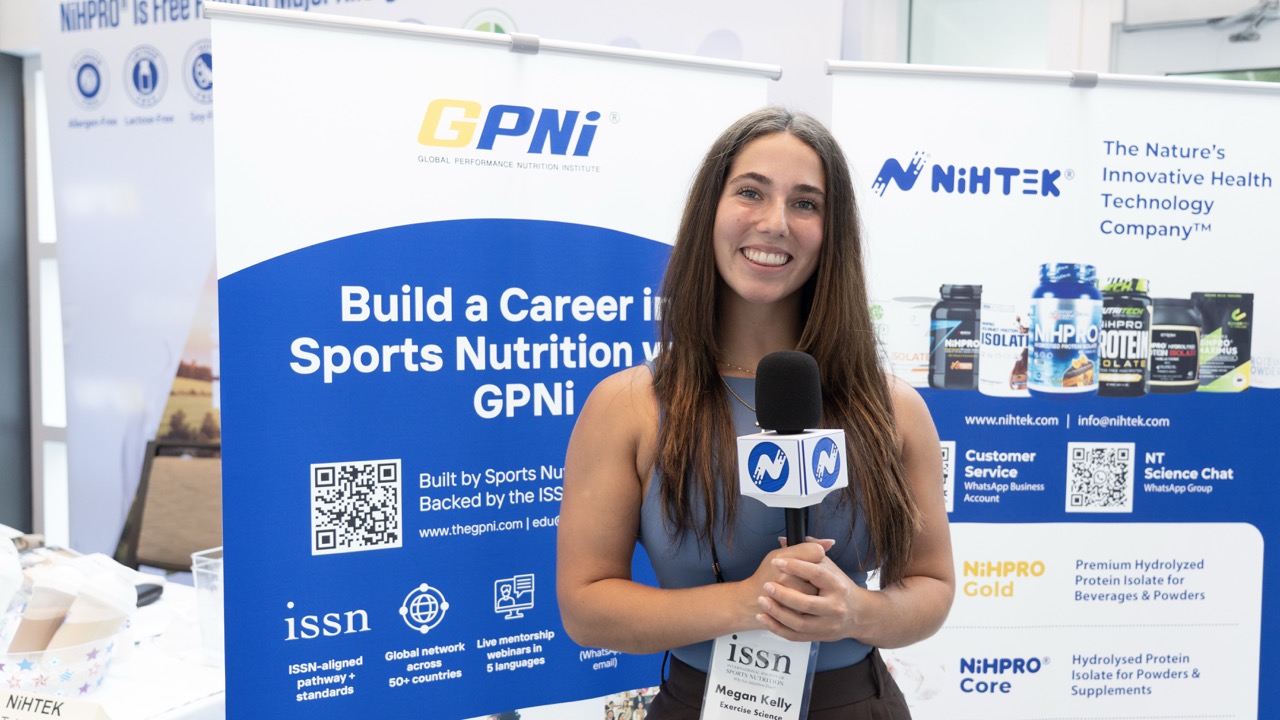
At a first professional conference, it is easy to assume that everyone else already belongs in the room. Megan Kelly arrived at ISSN 2026 as an undergraduate student, preparing to present and keenly aware of how much she still had to learn. What surprised her was not only the science, but how welcome she felt.
“No two people are the same. Focus on what makes you feel good—and run with it.”
— Megan Kelly
Megan Kelly
- Exercise and Sport Science student at Coastal Carolina University
- Undergraduate researcher mentored by Dr. K. Michelle Singleton
- Research interest in collegiate athletes, energy demands, and body composition
- Interested in helping people improve without making fitness unhealthy
Megan’s route into the field began through movement. She started lifting with her stepfather and took part in Savage and Spartan races. The experience gave her an appreciation for physical progress, but also raised a more important question: how can people pursue better performance without allowing training, food, or body goals to become unhealthy?
A Mentor Invited Her into the Room
The immediate answer to how Megan reached ISSN is simple: a mentor asked her to come. Dr. K. Michelle Singleton introduced her to sports nutrition research, involved her in studies, and then opened the door to a professional conference.
That invitation mattered because early-career opportunities are rarely obvious from a course catalogue. A student may know that research exists without knowing how to join a project, present a poster, or speak with people working in the field. A mentor can make those first steps concrete.
Megan’s experience also shows what students must contribute in return. An invitation becomes valuable when it is met with preparation, curiosity, and the willingness to participate even when the environment feels unfamiliar.
The First Conference Changes the Scale of Learning
In a classroom, students usually encounter science after it has been organised into lectures and assessments. At a conference, they see questions being debated while the evidence is still developing. They hear researchers explain what a study can support, where uncertainty remains, and which problems deserve further work.
For Megan, ISSN offered the chance to present, listen, and learn directly from people across the profession. It also challenged the assumption that experienced researchers are unapproachable. Feeling welcomed did not remove the nerves; it made it possible to act despite them.
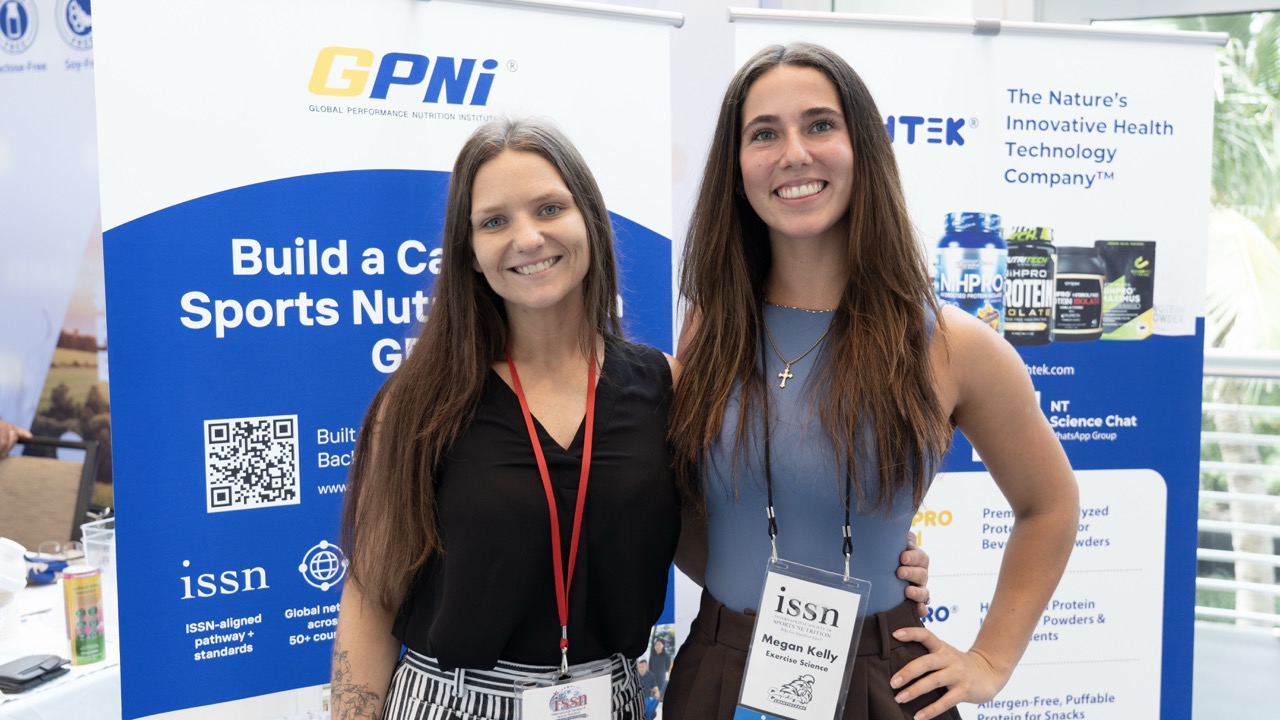
Individualization Is More Than a Slogan
One of Megan’s clearest conclusions is that no two people are the same. Athletes can share a sport and still differ in training load, body composition, food access, medical history, goals, stress, and their relationship with eating.
This matters particularly when discussing energy needs. A general recommendation may be a starting point, but responsible support requires attention to the person in front of you. Helping someone “better themselves” should never mean forcing them into a rigid model that damages health.
Begin by Participating
Students often think they must become experts before they can attend a conference or contribute to research. Megan’s story suggests the opposite. Those experiences are part of how expertise begins.
The first step may be asking a professor about a project, volunteering to help collect data, reading around a question, or presenting work before confidence feels complete. Participation turns an abstract interest into a professional direction.
A Question for You
If you attended your first sports nutrition conference tomorrow, what would you most want to learn—and whom would you want to meet?
Follow Megan Kelly
Instagram: https://www.instagram.com/megann_.kelly/
LinkedIn: https://www.linkedin.com/in/megan-kelly-731303293/
From Learning to the Profession
GPNi® connects structured sports nutrition education and ISSN-aligned certification with the people, science, and professional community shaping the field. Education gains value when it helps learners enter real settings, ask better questions, apply evidence responsibly, and continue developing through practice and professional relationships.
Explore the pathways:











 Instagram
 Facebook
 YouTube
 Twitter
 Linkedin