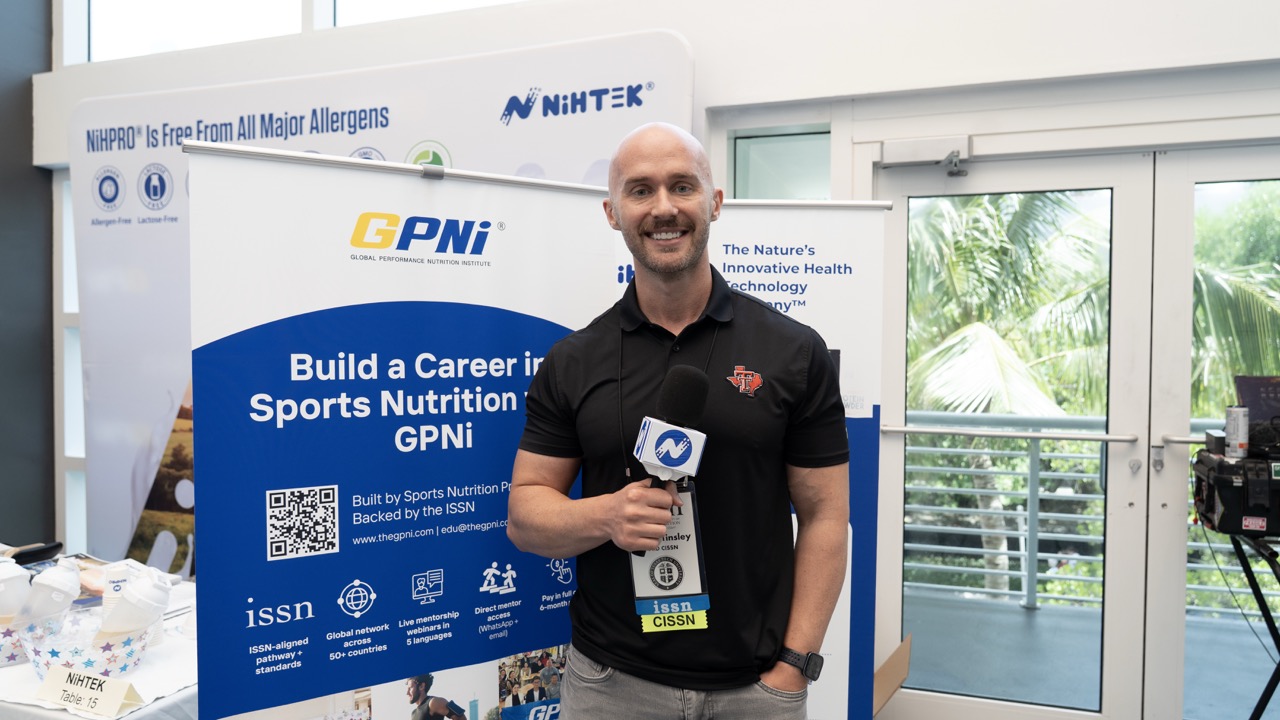
Dr. Grant Tinsley’s first ISSN conference did not begin with a carefully planned professional-development budget. He booked a last-minute flight, found space on the floor of another graduate student’s hotel room, and went because a friend told him the networking might be valuable. More than a decade later, he can trace research, collaborations, and enduring professional relationships back to that decision.
“Coming to the ISSN conference is really an investment in yourself.”
— Dr. Grant Tinsley
Dr. Grant Tinsley
- Professor of Human Performance at Texas Tech University
- Director of the Energy Balance & Body Composition Laboratory
- Fellow of the ACSM and ISSN; Certified Strength and Conditioning Specialist with distinction
- Researches body-composition assessment, energy balance, intermittent fasting, overfeeding, and sports nutrition strategies
From Muscle Magazines to Human Trials
As a teenager, Grant read muscle magazines and tried to work out which claims were true. He was interested in training, but also drawn to science. During university, sports nutrition and exercise physiology became the meeting point between those interests.
The direction became clearer during his PhD, when he began studying nutrition and exercise systematically and conducting trials in people. Instead of asking only whether an idea sounded plausible, he could help test what worked, what did not, and under which conditions.
That shift—from consumer curiosity to research question—is central to scientific training. It requires methods, statistics, careful interpretation, and the willingness to accept results that do not match expectations.
Conversations Can Become Studies
Grant describes ISSN as serious about science without becoming socially rigid. Researchers, students, sponsors, practitioners, and industry attendees share the same environment, making it easier for questions to move between groups.
Many studies conducted in his laboratory have grown from conversations at the conference. A sponsor may bring a practical question. Another researcher may contribute a method or population. A casual exchange can become a collaboration once the idea is made testable and the scientific boundaries are clear.
This does not mean every conversation should become a funded trial. It means useful research often begins when people with different knowledge discover that they are looking at the same problem from different sides.
The Return on Investment Is Cumulative
Students may view conference costs only in immediate terms: registration, travel, accommodation, and time. Grant frames the decision more broadly. The return can include knowledge, research ideas, professional confidence, job visibility, and relationships that remain active for years.
Not every connection lasts, and not every event produces an obvious opportunity. The value becomes clearer across repeated participation. People see how you work, follow your progress, and may eventually ask for your help—or be in a position to help you.
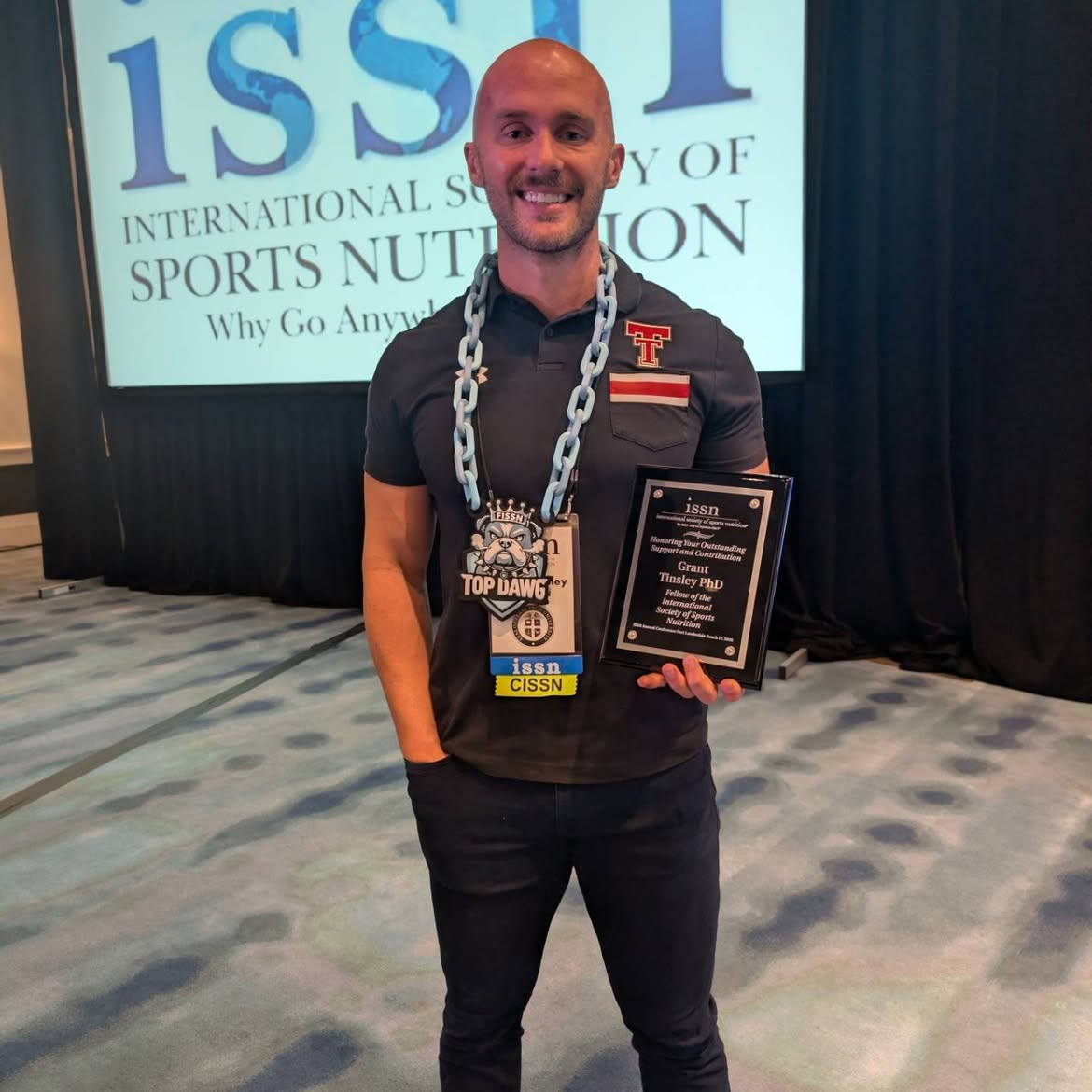
Make the Connection, Then Maintain It
Grant advises young professionals to surround themselves with good people, meet widely, and stay connected. The first introduction is only the beginning. Relationships develop through shared work, thoughtful follow-up, mutual assistance, and time.
For students who find networking difficult, simply attending is already a meaningful step. A poster, a question after a talk, or an introduction from a colleague creates a reason to speak. Confidence follows repeated action more reliably than it precedes it.
A Question for You
What professional investment—education, a conference, a research project, or a relationship—has produced the greatest long-term return for you?
Follow Dr. Grant Tinsley
- Website: https://granttinsley.com/
- Instagram: https://www.instagram.com/grant_tinsley_phd/
- X: https://x.com/GrantTinsleyPhD
- YouTube: https://www.youtube.com/@granttinsleyphd
From Learning to the Profession
GPNi® connects structured sports nutrition education and ISSN-aligned certification with the people, science, and professional community shaping the field. Education gains value when it helps learners enter real settings, ask better questions, apply evidence responsibly, and continue developing through practice and professional relationships.
Explore the pathways:









 Instagram
 Facebook
 YouTube
 Twitter
 Linkedin