
Why sports nutrition education must close the gap between information and decisions.
A learner can watch hours of lectures, recognise every key term and still struggle when faced with a real person, an incomplete case and competing priorities. That gap is not a failure of intelligence. It is the difference between exposure to information and the ability to use it.
Serious sports nutrition education must develop both. Foundational knowledge matters, but professional work asks the learner to select relevant information, judge uncertainty, communicate clearly and make decisions within scope.
Active learning changes the learner’s job
In a traditional lecture, the learner can feel fluent because the explanation makes sense while it is being delivered. Active learning asks for more: retrieve the idea, apply it, compare options, explain the reasoning and respond to feedback.
A large meta-analysis across science, technology, engineering and mathematics courses found that active-learning approaches improved examination performance and reduced failure compared with traditional lecturing. The evidence is not specific to sports nutrition, but the principle is highly relevant: learning becomes more durable when the learner has to do something meaningful with it.
Cases reveal whether knowledge is organised
A good case does not merely ask for a fact. It presents a goal, training context, constraints and information that may be missing. The learner must decide what matters, what to ask next and what cannot yet be concluded.
For example, recommending a supplement is not simply naming an ingredient associated with an outcome. The professional should consider the evidence for the population and dose, the athlete’s diet and training, safety, product quality, competition rules, cost and whether the intervention solves the real problem.
Writing makes reasoning visible
Professional report writing forces the learner to organise an assessment, state assumptions, connect recommendations to evidence and use language the recipient can understand. It also creates something a tutor can evaluate more precisely than a multiple-choice answer.
Clear writing is a professional skill. It reduces ambiguity, supports collaboration and exposes weak reasoning before it reaches a client, athlete or decision-maker.

Retrieval and feedback strengthen learning
Rereading can create familiarity without reliable recall. Practice questions, short explanations from memory and spaced review require retrieval. A 2024 systematic review of active recall in health professions education found generally positive effects, while also noting variation in methods and study quality.
Feedback then helps the learner correct both the answer and the process used to reach it. The most useful feedback is specific: what was sound, what was missed, why it matters and what the learner should try next.
Application must include professional boundaries
Realistic education should also teach when not to act. Red flags, eating-disorder risk, medical conditions, medication interactions and regulated nutrition services may require referral. Knowing the limits of a credential is part of competence, not an obstacle to it.
What to look for in a programme
- A clear curriculum that progresses from foundations to more complex decisions.
- Qualified educators with relevant research or professional experience.
- Cases, scenarios or projects that require explanation—not only recognition.
- Feedback and transparent assessment criteria.
- Evidence standards, source literacy and regular content review.
- Explicit scope-of-practice and referral guidance.
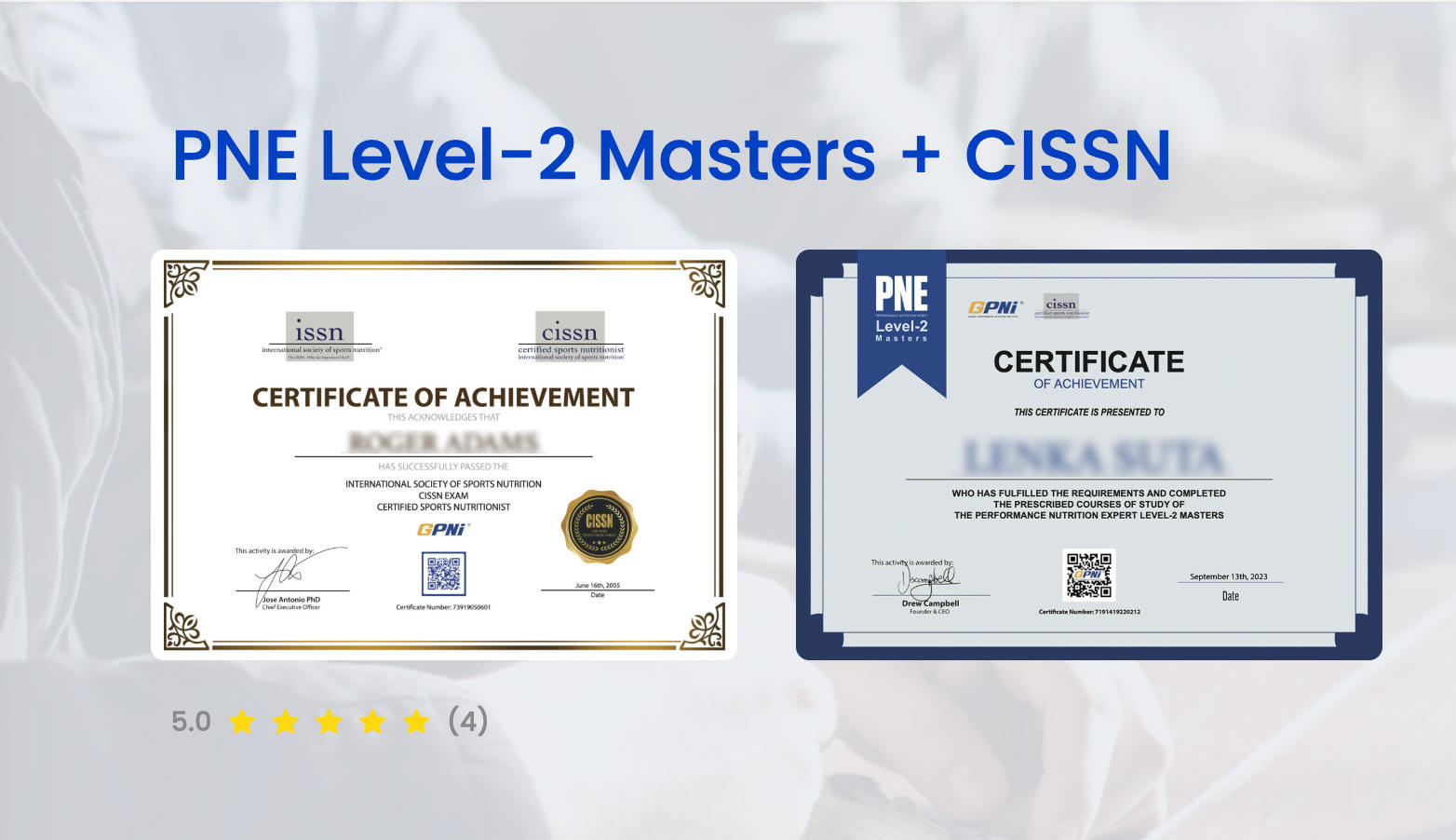
GPNi’s current course pages describe on-demand learning combined with cases, real-world scenarios and, at the advanced level, professional report writing. Those elements matter because the goal is not simply to finish content. It is to become better at using evidence responsibly.
Information is necessary. Application is where information begins to become professional capability.
Test a course with one sample lesson
After a lesson, close the material and explain the central idea from memory. Then work through a new case and write the reasoning behind your choice. Check the source used by the educator and note one limitation. If the lesson only felt clear while the video was playing, more retrieval and application are needed.
This small test can also improve self-directed study. Turn headings into questions, space review across several days and ask a colleague to challenge the recommendation. Learning should leave you able to retrieve, adapt and defend an idea—not simply recognise the slide on which it appeared.











 Instagram
 Facebook
 YouTube
 Twitter
 Linkedin