It is often referred to as "just sugar," when in fact it has a much more significant role in health and performance. glucose can be used to power movement and form the backbone for key carbohydrates. It is also a primary energy source as well as a basic building block within living organisms.
Let's begin with a very simple question.
Q. Glucose provides energy to organisms, and is also a component in many carbohydrates. True or false?
Answer: True
Why Glucose is a Critical Source of Energy?
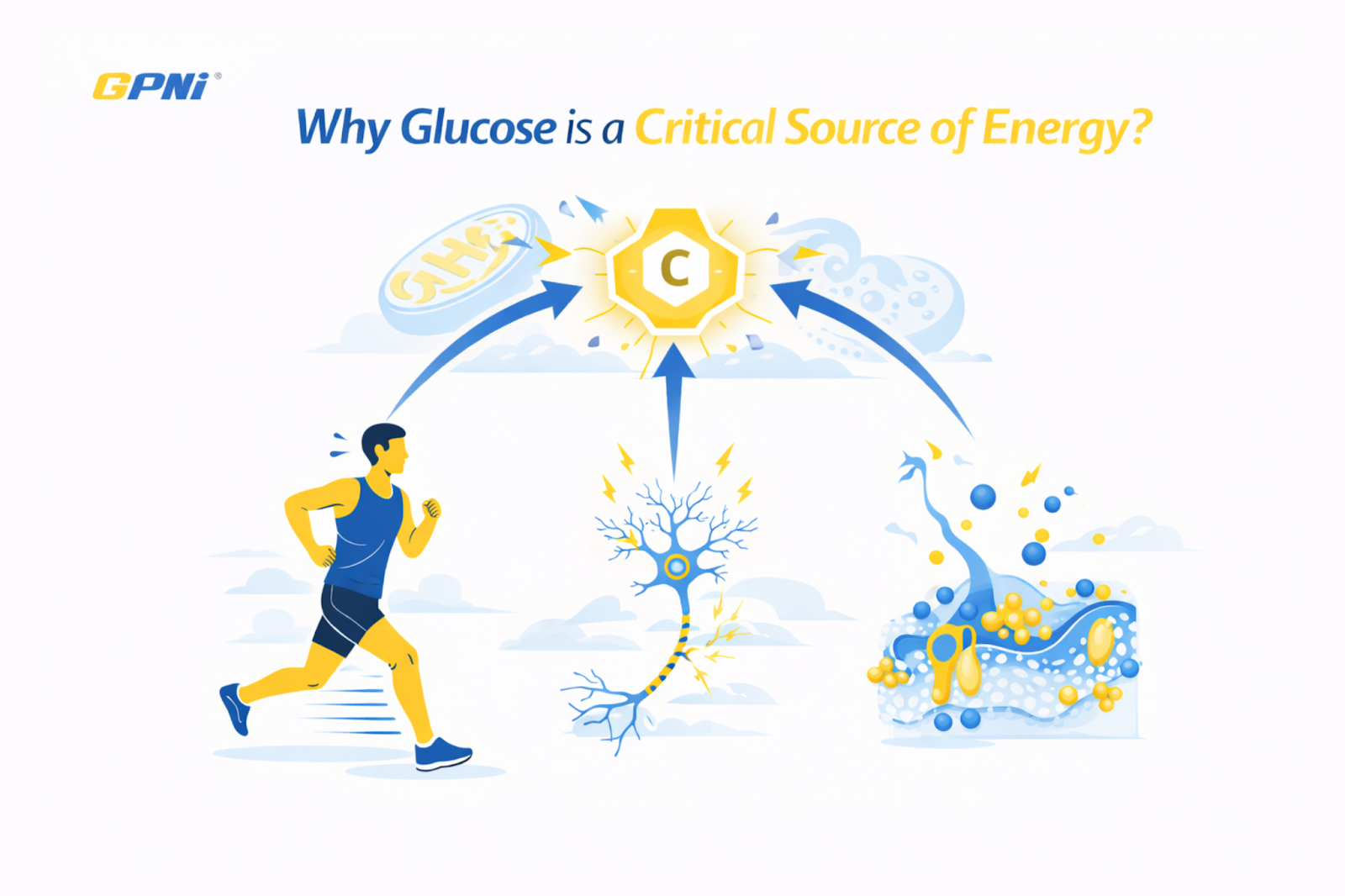
The glucose is at the heart of energy metabolism. It is broken down into ATP by specialized transporters as soon as it enters the cell.
ATP is essential for:
- Muscle contractions
- Nerve Signaling
- Active Transport across Cell Membranes
- The cells are alive because of the biochemical reactions they undergo.
This process begins with glycolysis. It is a metabolic pathway which allows cells to efficiently extract energy from glucose.
Glucose works with or without Oxygen

The flexibility of glucose makes it a highly valuable fuel.
- Even in anaerobic conditions (low oxygen), glycolysis is still able to produce ATP. This is particularly important when performing intense, short efforts such as sprinting, jumps, or heavy resistance exercises.
- Under aerobic conditions, the products of glycolysis are transported into the mitochondria. citric cycle, and oxidative phosphorylation produce much more ATP in the mitochondria.
This adaptability allows it to support both daily activities as well as high intensity exercise. It is a cornerstone in human performance.
Glucose is a building block
glucose is not only a fuel but also a building block for larger carbohydrates.
- starch is formed when glucose molecules in plants are linked to form glucose molecules. This acts as a system for energy storage.
- In animals and humans, the main storage of glucose is glycogen. This occurs in the muscles and liver.
These larger carbohydrate structure act as energy reserves. Enzymes break starch or glycogen down to glucose when energy demands increase.
Glucose Storage Supports Performance

Imagine glycogen as a glucose bank. Stored glycogen fuels muscles and helps to maintain blood glucose during exercise, stress or fasting. It is for this reason that adequate carbohydrate consumption is important to athletic performances, quality of training and recuperation.
The body cannot meet its energy needs efficiently if it does not have enough glucose, especially during prolonged or high-intensity activity.
Two essential roles of glucose
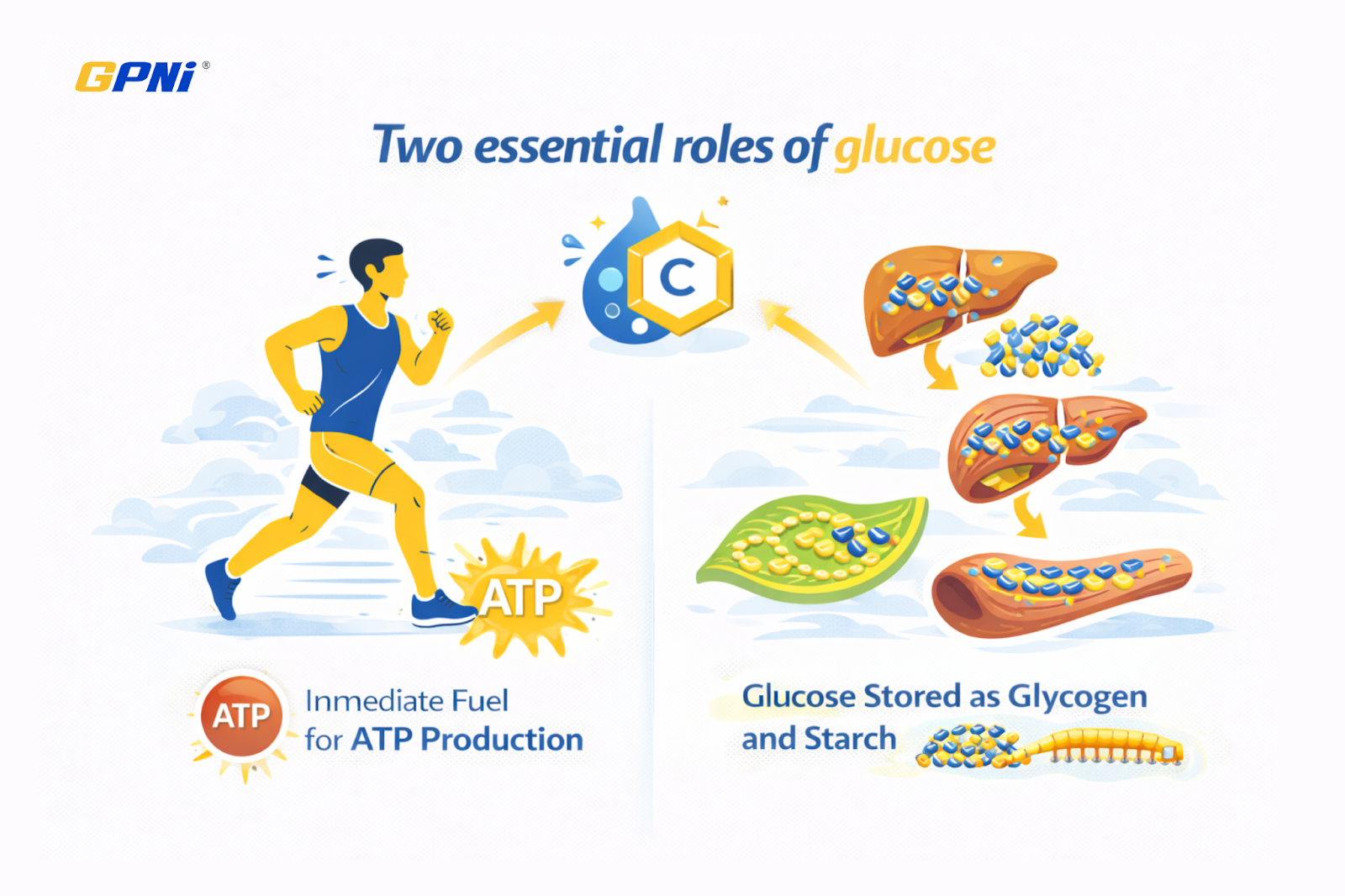
Glucose is a vital substance that performs two essential functions in the human body.
- Immediate Fuel for ATP Production
- Storage form and building block in complex carbohydrates such as glycogen and starch
The dual role of glucose makes it one of the most important molecules for biology.
The Take-Home Message
It is much more than a simple sweetener. It is a versatile fuel capable of producing energy with or without oxygen and a building block which allows the body store and release energy as needed.
Glucose metabolism plays a central role in the body's function, whether it is to support daily activity, intense exercise or long-term balance of energy.
Reference
Berg, J.M., Tymoczko, J.L., Gatto, G.J., & Stryer, L. (2015). Biochemistry (8th ed.).















 Instagram
 Facebook
 YouTube
 Twitter
 Linkedin