Hi everyone, in our last article, we talked about how vegetables offer far more than vitamins, minerals, and dietary fiber. Many vegetables also contain important compounds known as phytochemicals, or plant compounds.
These compounds are not always classified as “essential nutrients” in the traditional sense, but they may still play meaningful roles in antioxidant defense, metabolic health, immune support, and long-term wellbeing. Last time, we introduced beta-carotene, a carotenoid that can be converted into vitamin A. Today, we’re looking at another member of the carotenoid family: lutein.
What is lutein?
Lutein was first identified about 100 years ago, originally from egg yolk. It is a carotenoid, and more specifically, a xanthophyll carotenoid. Unlike beta-carotene, lutein cannot be converted into vitamin A in the body.
But lutein has a very specific and important place where it tends to do its work: the eyes, especially the macula of the retina.
Lutein is found in several tissues throughout the body, including the retina, fat tissue, skin, liver, kidneys, spleen, and breast tissue. Among these, the retina has one of the highest concentrations.
The macula is the part of the retina responsible for sharp central vision. Reading text, recognizing faces, and seeing fine details all depend on healthy macular function. Lutein and zeaxanthin are two key components of the macular pigment.
You can think of lutein as a kind of “natural filter” inside the eyes. It helps filter some high-energy blue light, while also acting as an antioxidant that may help reduce the impact of oxidative stress on retinal cells.
Why is lutein linked to eye health?
The way we use our eyes has changed dramatically. Smartphones, computers, tablets, indoor lighting, long working hours, and long study sessions all mean our eyes are under constant demand.
This does not mean lutein can “fix” vision problems. However, from a nutritional support perspective, getting enough lutein through the diet may help support macular pigment levels and contribute to normal visual function.
Lutein and zeaxanthin have also received attention in research on age-related macular degeneration. For example, in the AREDS2 study, lutein and zeaxanthin were included in an eye health nutrition formula for specific groups of people. However, this type of research mainly applies to people with certain risks or existing eye health concerns. It does not mean everyone needs high-dose supplements.
For most people, the more practical approach is simple: eat enough dark-colored vegetables, and eat a variety of them regularly.

Lutein is not only about the eyes
Beyond eye health, lutein is also known for its role in antioxidant defense.
The body naturally produces free radicals during exercise, metabolism, stress, and exposure to environmental factors. When free radical production becomes excessive and the body’s defense systems cannot keep up, oxidative stress may occur.
As an antioxidant plant compound, lutein can help neutralize certain reactive oxygen species and support the body’s normal antioxidant balance. Lutein may also play a role in supporting normal immune function.
This is one reason we often say vegetables are not just a side dish. They are a key part of a healthy daily diet. They provide fiber and micronutrients, but also a wide range of plant compounds with potential health value.
Which foods contain lutein?
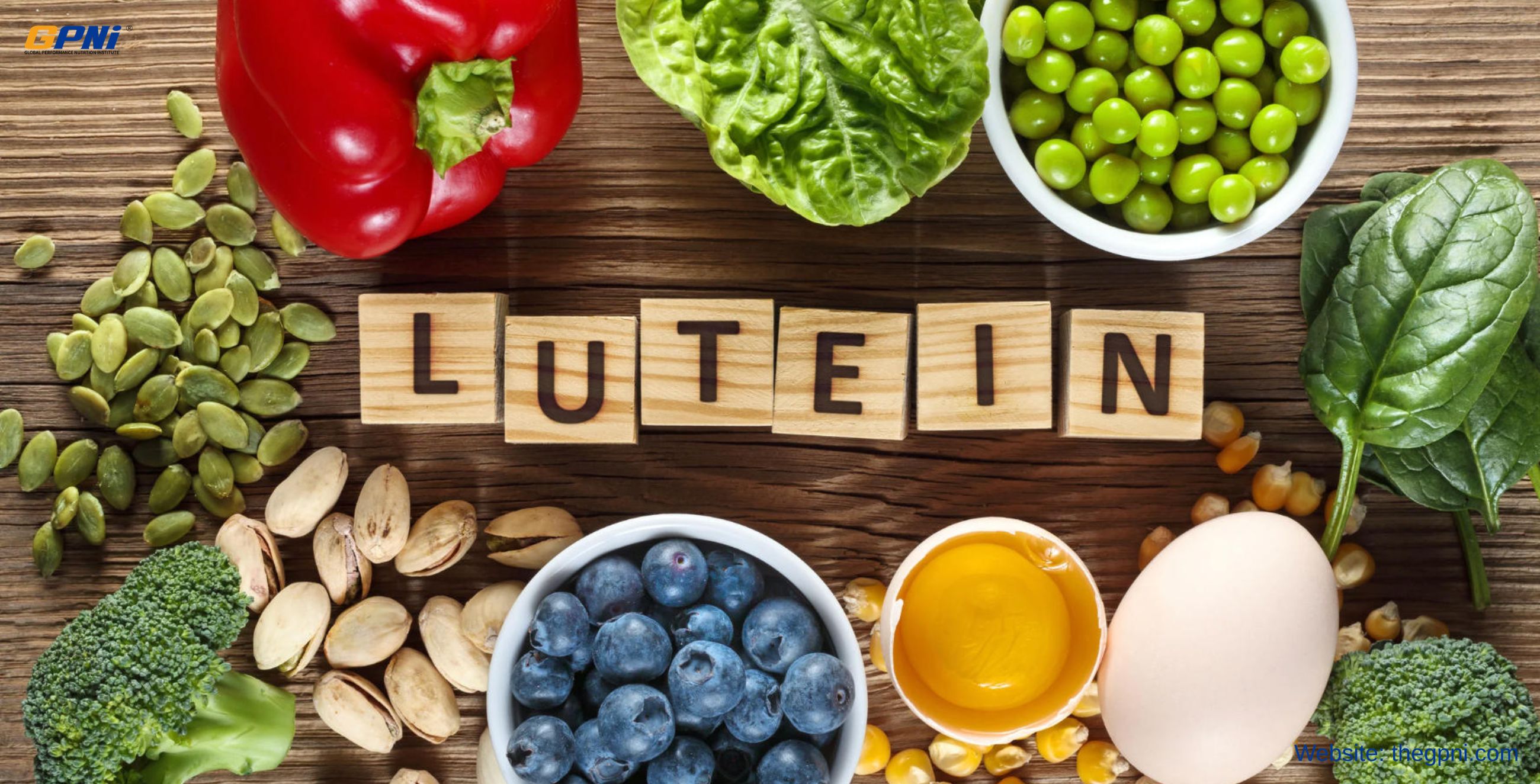
Lutein is mainly found in dark green, yellow, and orange vegetables and fruits. Egg yolk also contains some lutein and zeaxanthin.
Good dietary sources include spinach, kale, collard greens, romaine lettuce, broccoli, Brussels sprouts, peas, zucchini, bell peppers, corn, and eggs. For athletes, students, office workers, and anyone who spends a lot of time using screens, these foods are worth including in everyday meals.
If you want to increase lutein intake through food, remember this simple rule: the deeper the color and the greater the variety, the more likely it deserves a place on your plate.
Many Western dietary guidelines encourage people to make vegetables and fruits a regular part of every meal. A practical way to think about it is to fill a generous portion of your plate with colorful plant foods, especially dark leafy greens and other deeply colored vegetables.
Lutein is fat-soluble, so vegetables rich in lutein do not always need to be eaten completely plain or boiled without oil. Pairing them with a small amount of healthy fat, such as olive oil, avocado, nuts, seeds, or eggs, may help improve carotenoid absorption.
Next time you see spinach, kale, broccoli, bell peppers, or corn, think of them as part of your plate’s “eye-supporting team.” The goal is not to eat one single vegetable in large amounts, but to eat a variety of colorful vegetables consistently over time.
In the next article, we’ll continue with another carotenoid. It is known for its strong antioxidant capacity and often appears in sports nutrition and health education. Can you guess which one it is?
References
Junghans, A. et al. “Macular pigments lutein and zeaxanthin as blue light filters studied in liposomes.” Archives of Biochemistry and Biophysics, 391(2), 160–164. 2001. doi:10.1006/abbi.2001.2411
Abdel-Aal, El-Sayed M. et al. “Dietary sources of lutein and zeaxanthin carotenoids and their role in eye health.” Nutrients, 5(4), 1169–1185. 2013. doi:10.3390/nu5041169
National Eye Institute. AREDS/AREDS2 Clinical Trials.














 Instagram
 Facebook
 YouTube
 Twitter
 Linkedin