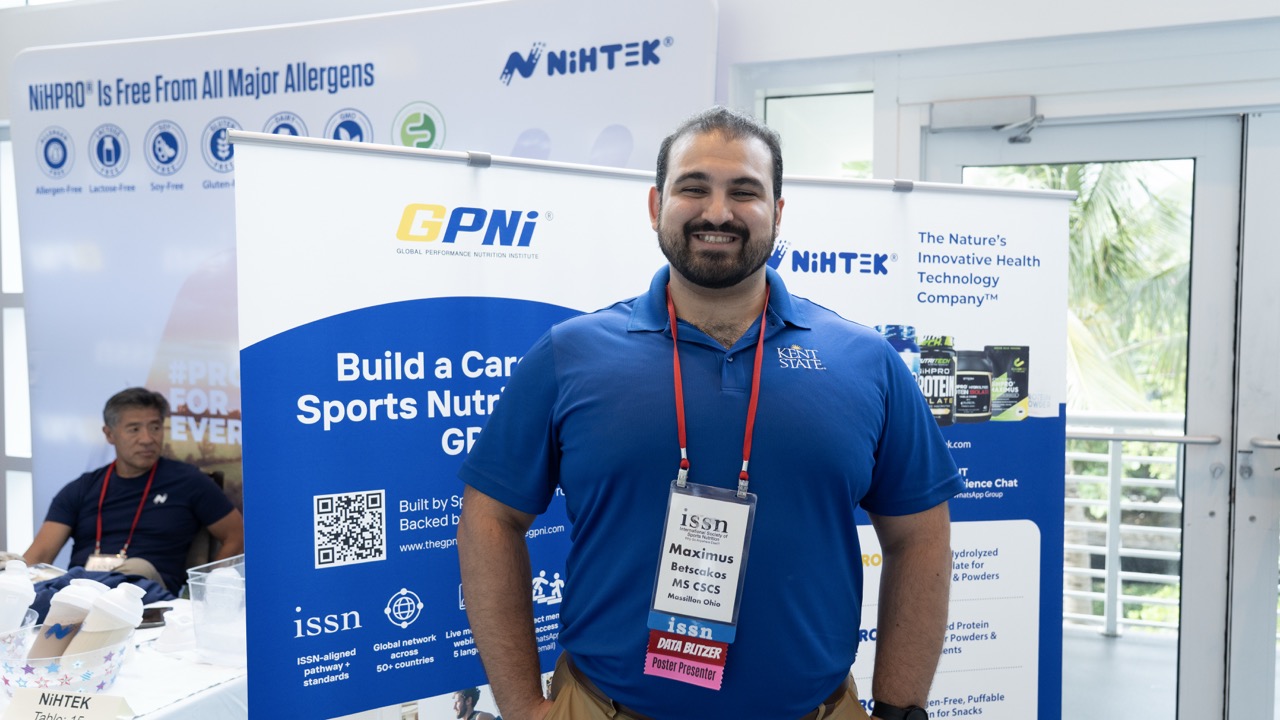
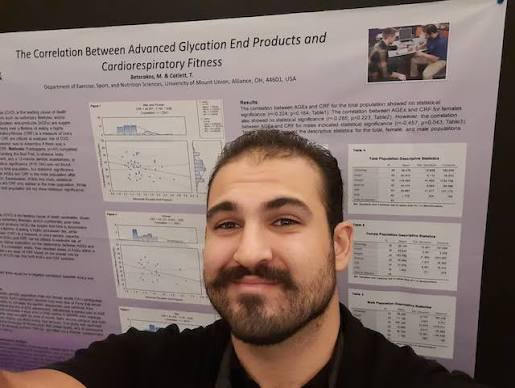
Maximus Betscakos first came to ISSN to present a student poster and add research experience to his résumé. The project placed second for Best Original Undergraduate Research Poster—but the more important result was the direction it gave his career.
“Get your feet wet in research and see which doors it opens.”
— Maximus Betscakos
Maximus Betscakos
- MS in Clinical Exercise Physiology from Ball State University
- BS in Exercise Science from the University of Mount Union
- Certified Strength and Conditioning Specialist
- Undergraduate research presenter and award recipient at ISSN
- Experience as a graduate assistant and clinical exercise physiologist in cardiac rehabilitation
A poster presentation can look like a small academic milestone. For Maximus, it became evidence that he could do research, discuss it in public, and belong in a professional scientific community.
His career has since moved across exercise science, strength and conditioning, graduate research, clinical exercise physiology, and cardiac rehabilitation. The route illustrates how one supervised opportunity can expand both confidence and the range of careers a student is able to imagine.
The Class That Changed His Direction
Maximus entered college considering pre-medical biochemistry. During the disruption of COVID, he took an exercise physiology class with Dr. Lonnie Lowery. His professor’s enthusiasm made the subject feel more aligned with his own interests than the laboratory path he had originally imagined.
He changed direction and became involved in research with Dr. Lowery and Dr. Scanlon at the University of Mount Union. That pivot was not a rejection of science. It was a decision to apply science through exercise, performance, and human health.
Students often treat changing a major or career goal as failure. Maximus’s experience suggests another interpretation: exposure provides better information. A plan should become more precise as someone learns what the work actually feels like.
Why the First Research Opportunity Matters
Maximus recommends becoming involved in research in whatever responsible way is available: as a participant, volunteer, assistant, or student investigator. Early involvement helps a student understand how studies are organised and whether research is a setting they enjoy.
It also develops transferable skills. Collecting data requires attention to protocol. Working with a team demands reliability. Presenting a poster requires a clear explanation of methods and results. Answering questions teaches a student to think under pressure without pretending to know what the study cannot show.
The résumé value is real, especially for graduate or PhD applications. More importantly, research involvement gives mentors direct evidence of how a student works—and gives the student experiences that can guide the next decision.
From Poster Presentation to Professional Confidence
At his first ISSN meeting, Maximus presented research in both a poster session and a rapid data-blitz format. His undergraduate project later received second place for Best Original Undergraduate Research Poster.
The recognition mattered, but the process mattered more. He learned to collaborate, communicate findings, respond to questions, and feel more comfortable in a room of researchers and professionals.
He continued returning to present additional work and follow developments across nutrition, exercise physiology, and sport science. What began partly as something to add to a résumé became an ongoing place to learn and participate.
Human Performance Beyond Competitive Sport
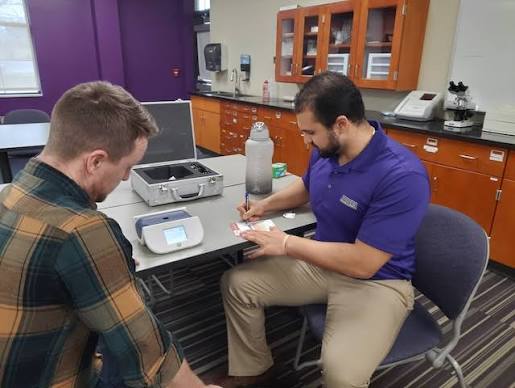
Maximus later completed an MS in Clinical Exercise Physiology at Ball State University. His work as a graduate assistant and clinical exercise physiologist brought him into cardiac rehabilitation.
That setting expands the meaning of performance. Progress may mean helping a patient rebuild strength after a cardiac event or surgery, regain confidence, return to daily activities, and improve beyond their previous level of health.
Exercise as medicine relies on science, assessment, communication, and the ability to motivate someone through a vulnerable period. It demonstrates that exercise science careers can serve athletes, but they can also improve independence and quality of life in clinical populations.
Build the Foundation, Then Test It in the Real World
GPNi® education and ISSN-aligned certification can strengthen a learner’s understanding of sports nutrition and evidence. For students in exercise science, that knowledge can complement training physiology, strength and conditioning, clinical exercise, or research.
The next step is participation. Volunteer in a laboratory, help with data collection, present a poster, ask a mentor about current projects, or observe how evidence is used in practice. Credentials are most useful when they help someone contribute responsibly in a real environment.
Maximus’s story shows why small opportunities deserve attention. A first project may not reveal an entire career, but it can provide the skills, relationships, and confidence needed to recognise the next door when it opens.
A Question for You
Which direction interests you most: sports performance, research, strength and conditioning, clinical exercise physiology, or cardiac rehabilitation?Watch the full GPNi®
Follow Maximus Betscakos
Instagram: https://www.instagram.com/maximus_betscakos/
LinkedIn: https://www.linkedin.com/in/maximus-betscakos-m-s-cscs-26701b313/
From Learning to the Profession
GPNi® connects structured sports nutrition education and ISSN-aligned certification with the people, science, and professional community shaping the field. Education gains value when it helps learners enter real settings, ask better questions, apply evidence responsibly, and continue developing through practice and professional relationships.
Explore the pathways:






 Instagram
 Facebook
 YouTube
 Twitter
 Linkedin