
With the World Cup in full swing, most of the conversation naturally goes to tactics, formations, substitutions, missed chances, and moments of individual brilliance.
That is the fun part of football.
But behind the match highlights, there is another layer of performance that is easier to miss: the environment. Heat, humidity, altitude, air quality, allergens, travel fatigue, sleep disruption, hydration, and recovery do not show up neatly on the scoreboard. Yet they can quietly influence how fast players run, how clearly they think, how well they recover, and how consistently they perform across a tournament.
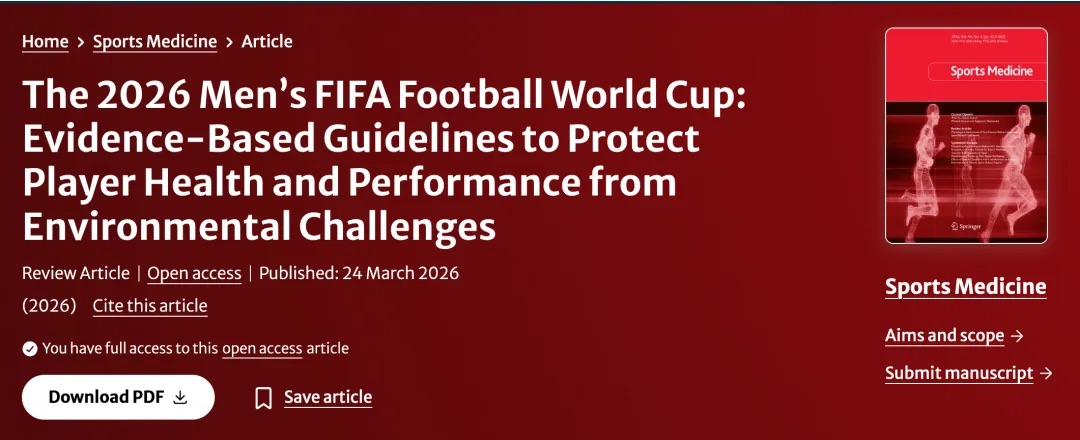
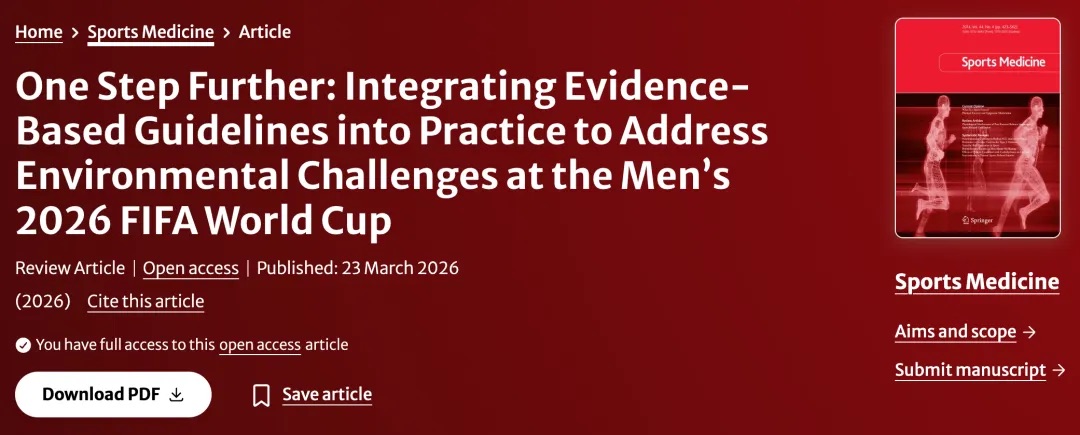
Two recent papers in Sports Medicine make this point especially well. Together, they argue that the 2026 Men’s FIFA World Cup presents an unusual combination of environmental challenges, and that protecting player health and performance requires more than generic advice.
For sports nutrition professionals, this is not only a football story. It is a reminder that performance nutrition does not happen in a vacuum.
The Environment Is Part of the Match
A football match is never played in a neutral physiological setting. The pitch, the climate, the travel schedule, the time zone, and even the air players breathe all become part of the performance problem.
The 2026 World Cup is particularly interesting because the tournament is spread across the USA, Mexico, and Canada. That means teams may face very different environmental conditions from one city to another. Some matches may involve significant heat stress. Others may take place at moderate altitude. Teams may also deal with air pollution, seasonal allergens, long-haul travel, jet lag, and accumulated travel fatigue.
Individually, each of these challenges is manageable. Together, they become much more complicated.
This is where the two Sports Medicine papers are useful. The first paper outlines the major environmental risks and evidence-based strategies to protect players. The second paper goes one step further and asks a more practical question: how can teams actually integrate these recommendations into tournament football without disrupting training, preparation, and player routines?
That second question matters. Science is only valuable if it can be translated into real-world practice.
Heat Does More Than Make Players Sweat
When we talk about heat in football, the conversation often stops at hydration. But heat stress affects much more than fluid loss.
As body temperature rises, players may reduce high-intensity actions, change pacing, and rely on different tactical behaviours. Decision-making may also be affected, especially late in matches when fatigue, thermal strain, and pressure combine. In football, where one sprint, one press, one recovery run, or one late defensive decision can change the game, these small physiological shifts matter.
From a nutrition perspective, heat also changes the fueling problem. Players do not just need water. They need a plan that considers fluid, electrolytes, carbohydrate availability, gastrointestinal comfort, and timing.
This is why “drink more” is not a serious performance strategy.
A better approach starts before kick-off. Athletes need to arrive well hydrated, understand their individual sweat losses, and practice their match-day drinking and cooling strategies in training. For some players, sodium replacement may be important. For others, the biggest challenge may be tolerating fluid and carbohydrate intake without stomach discomfort.
Cooling strategies can help, but they are not magic. Ice towels, cold fluids, ice slurries, shade, modified warm-ups, and cooling breaks may all have a role. But they need to be tested ahead of time. A strategy that looks good on paper can fail quickly if a player dislikes it, cannot tolerate it, or finds that it disrupts their usual routine.
Altitude, Air Quality, and Allergens Are Not Minor Details
Altitude is another challenge that is easy to underestimate. Matches in Mexico City and Guadalajara take place at moderate altitude, where oxygen availability is lower than at sea level. For players who are not acclimatised, this can affect aerobic capacity and recovery from repeated high-intensity efforts.
In football terms, that may show up as slower recovery between sprints, altered pacing, or a reduced ability to sustain pressure. It does not mean every player will suddenly perform poorly. But it does mean the physical cost of the same tactical demand may change.
Air quality and allergens add another layer. Pollution, ozone, particulate matter, pollen, and even wildfire-related air quality changes can affect respiratory comfort and health, especially in players with asthma, allergies, or airway sensitivity. Again, this is not just a medical issue. If breathing is compromised, training quality, recovery, and match performance may all be affected.
For support teams, the lesson is clear: environmental monitoring should not be treated as background information. It should inform training load, recovery planning, medication management, nutrition support, and match-day decision-making.
Travel Fatigue Is a Performance Variable
Long-haul travel is often discussed as an inconvenience. In tournament football, it is more than that.
Crossing time zones can disrupt circadian rhythm, sleep, appetite, digestion, mood, and cognitive performance. Even within the tournament, repeated flights and changing locations can accumulate into travel fatigue. A player may not be “jet-lagged” in the strict sense, but still feel heavy, flat, disoriented, or under-recovered.
This is where nutrition, sleep, and scheduling overlap.
Meal timing can help support adjustment to a new time zone. Caffeine can be useful, but poorly timed caffeine may make sleep worse. In-flight hydration matters, but so does food hygiene, gastrointestinal comfort, and avoiding unnecessary disruption. Sleep banking before travel, light exposure after arrival, and consistent routines may also help.
None of these strategies are glamorous. But in a tournament, boring details often become meaningful advantages.
The GPNi Perspective: Evidence-Based Means Practice-Compatible
The most important message from these papers is not simply that teams should use evidence-based strategies. Most elite teams already know that.
The harder challenge is implementation.
A national team may only have a short preparation window. Players arrive from different clubs, leagues, climates, time zones, injury histories, and nutritional habits. Some may be heat adapted. Some may not. Some may tolerate aggressive cooling strategies. Others may hate them. Some may need special respiratory management. Others may be more affected by sleep disruption.
That is why a one-size-fits-all protocol rarely works.
Evidence-based sports nutrition should be structured, but not rigid. The best approach is usually layered: identify the biggest environmental risks, prioritise the highest-impact strategies, test them before competition, and adjust based on the athlete’s response.
In this sense, the World Cup is a useful case study for all sports nutrition practitioners. It reminds us that nutrition is not only about macros, supplements, or recovery shakes. It is also about context.
Heat changes hydration and carbohydrate needs. Altitude changes physiological cost. Travel changes sleep and appetite. Air quality changes respiratory risk. The same player, with the same fitness and the same diet, may respond differently in a different environment.

Takeaway
The World Cup may be decided by goals, tactics, and talent. But player health and performance are also shaped by factors that fans rarely see.
Heat, altitude, travel, air quality, hydration, sleep, and recovery all sit behind the match. They do not replace football skill, but they influence how consistently that skill can be expressed.
For GPNi, the key lesson is simple: performance nutrition must be built around the real environment athletes face.
Not the textbook environment.
Not the perfect lab setting.
The real one.
References
- Esh CJ, Carter S, Bougault V, Girard O, Janse van Rensburg DC, Chrismas BCR, Meyer T, et al. The 2026 Men’s FIFA Football World Cup: Evidence-Based Guidelines to Protect Player Health and Performance from Environmental Challenges. Sports Medicine. 2026;56:1337–1361. doi:10.1007/s40279-026-02398-4.
- Esh CJ, Carter S, Bougault V, Girard O, Janse van Rensburg DC, Chrismas BCR, Meyer T, et al. One Step Further: Integrating Evidence-Based Guidelines into Practice to Address Environmental Challenges at the Men’s 2026 FIFA World Cup. Sports Medicine. 2026;56:1363–1380. doi:10.1007/s40279-026-02415-6.
- Racinais S, Hosokawa Y, Akama T, Bermon S, Bigard X, Casa DJ, et al. IOC Consensus Statement on Recommendations and Regulations for Sport Events in the Heat. British Journal of Sports Medicine. 2023;57(1):8–25.
- Périard JD, Eijsvogels TMH, Daanen HAM. Exercise under Heat Stress: Thermoregulation, Hydration, Performance Implications, and Mitigation Strategies. Physiological Reviews. 2021;101(4):1873–1979. doi:10.1152/physrev.00038.2020.
Disclaimer
This article is for educational and scientific discussion only. It should not be interpreted as individualized medical, nutrition, or performance advice. Athletes and teams should work with qualified sports medicine and sports nutrition professionals to develop strategies appropriate to their health status, sport, environment, and competition schedule.













 Instagram
 Facebook
 YouTube
 Twitter
 Linkedin